Ask anyone who has lived in Hamilton for more than a few winters and they'll tell you: the weather here is not gentle on homes. The city sits at the western end of Lake Ontario, at the base of the Niagara Escarpment — a geography that creates a specific and relentless combination of weather conditions that most Canadian cities simply don't experience in the same way.
Wind off the lake. Persistent humidity through the warmer months. Freeze-thaw cycles that can repeat dozens of times in a single winter. Lake-effect snow that deposits significant accumulation in short bursts. Heavy spring rainfall that follows a winter's worth of frozen precipitation off rooftops and down exterior walls. Hamilton homes deal with all of it — and their siding takes the full force of every season.
This isn't an argument for spending more on siding than necessary. It's an argument for understanding what your home is actually up against before making a material selection or deciding whether aging siding is worth repairing or replacing. The right siding for a Hamilton home is one that's matched to the specific demands of this climate — and that distinction matters more here than in many other parts of Ontario.
What Hamilton's Climate Actually Does to Exterior Siding
Hamilton's position at the convergence of lake, escarpment, and the broader Great Lakes weather system creates four specific conditions that are directly relevant to siding performance and longevity.
Freeze-Thaw Cycling
Of all the weather forces acting on exterior siding in Hamilton, freeze-thaw cycling is the most consistently damaging over time. Unlike regions that experience a single deep freeze and stay cold until spring, Hamilton's winters are characterized by repeated transitions across the zero-degree threshold. A week of cold, a warming trend, several more days below zero — this pattern can repeat thirty or more times between November and March.
What this means for siding: every material expands slightly when it warms and contracts when it cools. In a climate with stable temperatures, this cycling is manageable. In Hamilton's climate, the repeated micro-movement at panel edges, seams, fastening points, and around openings gradually works materials apart. Small gaps widen. Sealants crack. Fasteners loosen incrementally. Moisture finds its way in through pathways that didn't exist in the siding's first few years.
Siding materials that are rigid and have a high rate of thermal expansion — some older vinyl formulations, for example — handle this cycling poorly. Materials with better flexibility, tighter dimensional stability, and higher impact resistance at low temperatures perform significantly better over a Hamilton home's exterior life.
Lake Ontario Humidity and Moisture Exposure
Hamilton's proximity to Lake Ontario keeps relative humidity elevated through much of the year, particularly during summer and early fall. High ambient moisture levels accelerate the degradation of siding materials that are not moisture-resistant — particularly wood-based products that absorb and release moisture repeatedly through the season.
Moisture cycling in siding materials produces the same kind of incremental damage as freeze-thaw cycling: paint that loses adhesion, wood fibres that swell and shrink until they crack, seams that open as material dimensions change. Over five to ten years, a home with siding that isn't properly moisture-resistant will show far more deterioration than the same home in a drier climate — even with identical installation quality.
Lakeside and lower-city properties closest to Lake Ontario face the highest moisture exposure. Homes on the mountain or in escarpment communities like Ancaster are somewhat more sheltered from direct lake humidity but experience their own challenges with precipitation and wind.
Wind-Driven Precipitation
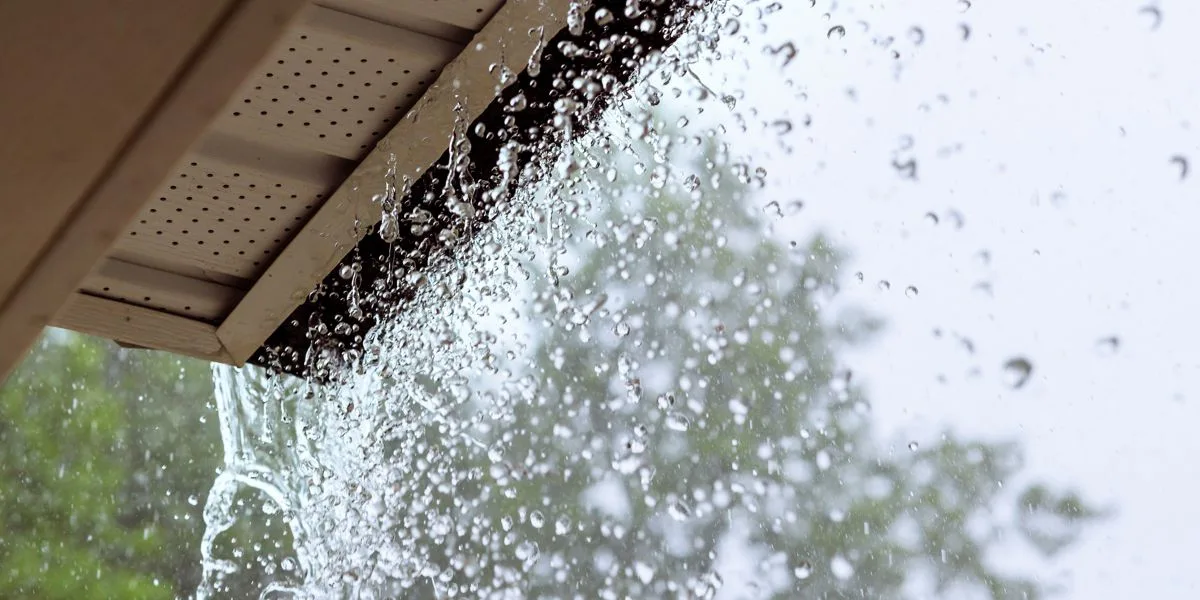
Hamilton experiences frequent wind events — both from westerly prevailing winds off Lake Erie and from the channeling effect of the Niagara Escarpment, which accelerates airflow across the lower city in certain weather patterns. Wind-driven rain and snow is qualitatively different from vertical precipitation in terms of how it interacts with exterior siding.
Rain that falls at an angle hits siding surfaces directly rather than running off them. It finds its way into any gap at panel edges, around window and door trim, and at the intersection of siding with other exterior materials. Homes with south and west-facing elevations in Hamilton experience the highest wind-driven moisture exposure — and those are often the elevations where siding deterioration appears first and progresses fastest.
Siding installation in this environment requires particular attention to sealing, flashing, and fastening at every transition point. A material that performs adequately with standard installation in a sheltered location may underperform with the same installation method in Hamilton's more exposed conditions.
Heavy Snow and Ice Accumulation
Hamilton sits in a zone that receives lake-effect snowfall from both Lake Ontario and, in some weather patterns, Lake Erie. Significant snow accumulation in short periods is a regular part of the winter calendar — and that snow sits against siding surfaces, against rooflines, and in the valleys and channels of exterior trim until temperatures rise enough to melt it.
Extended contact between snow and siding surfaces creates sustained moisture exposure at the base of walls, around window and door frames, and wherever snow accumulates against vertical surfaces. Ice that forms at the base of walls or within siding gaps during melt-and-refreeze events can cause physical damage to panel edges and fasteners. Siding that is porous, has inadequate moisture barriers behind it, or is installed without proper attention to base flashing at ground level is particularly vulnerable.
The combination of these four conditions — freeze-thaw cycling, humidity, wind-driven precipitation, and snow accumulation — means Hamilton siding works harder and ages faster than in many other Ontario cities. Material selection and installation quality both matter significantly more as a result.
What Happens to Siding That Isn't Up to the Job
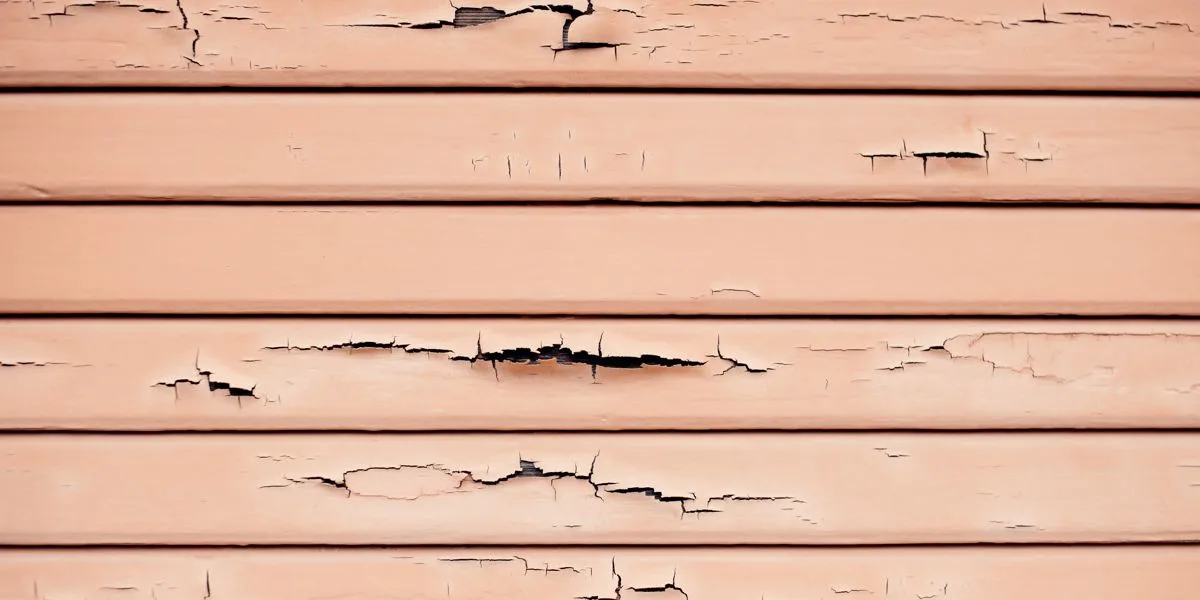
When siding isn't matched to Hamilton's climate demands — whether because of the wrong material choice, inadequate installation, or simply age — the failure pattern tends to follow a predictable sequence. Understanding it helps homeowners recognize early signs before they progress to expensive structural damage.
Surface Deterioration
The first signs of climate-related siding failure are almost always cosmetic. Paint fades unevenly, with south and west-facing elevations showing the most change. Chalking — a powdery residue on the siding surface — appears on vinyl and other synthetic materials as UV exposure degrades the outer layer. Panels that were once uniformly flush begin to show subtle waviness as thermal cycling and moisture absorption alter their dimensions.
These early signs are easy to dismiss as normal aging. The problem is that they indicate the siding's protective function is already beginning to degrade — and the progression from surface deterioration to moisture infiltration is faster in Hamilton's climate than in more sheltered regions.
Seam and Joint Failure
As material dimensions change through repeated thermal cycling, the seams between siding panels and the joints at corners, trim transitions, and around openings begin to open up. Caulking that was applied during installation has typically hardened and lost its elasticity within five to eight years. Panel edges that were tightly fitted on installation day develop gaps measurable in millimetres after a decade of cycling.
These gaps are the primary entry point for water into the wall assembly. Once water reaches the housewrap or building paper behind the siding, it either drains harmlessly if the drainage plane is functioning correctly, or it migrates into the insulation and sheathing if the installation has any gaps or deficiencies. In Hamilton's high-moisture environment, even small entry points are exploited repeatedly.
Wall Assembly Moisture Damage
The most serious consequence of siding failure in Hamilton's climate is moisture reaching the wall assembly behind the cladding. Wet insulation loses its thermal resistance value — meaning the home becomes less energy-efficient even before any visible interior damage appears. Sheathing that stays wet through repeated wetting-and-drying cycles develops mold and begins to lose structural integrity. Framing members that are exposed to persistent moisture eventually rot.
By the time interior signs appear — soft drywall near an exterior wall, staining on interior surfaces, a persistent musty smell in rooms that face prevailing weather — the damage to the wall assembly has typically been developing for months or years. Remediation at that stage involves not just siding replacement but opening the wall to dry out and replace damaged components.v
Siding replacement is significantly less expensive than wall assembly remediation. Catching siding failure before moisture reaches the sheathing and framing is the critical decision point for Hamilton homeowners.
What to Look for in Siding for a Hamilton Home
Given Hamilton's specific climate demands, there are several performance characteristics worth prioritizing when evaluating siding options — whether for a new installation or a replacement project.
Moisture Resistance
The siding material itself should be non-porous or have a sealed, moisture-resistant surface that doesn't absorb water from prolonged contact. Fiber cement and quality vinyl both perform well on this measure. Engineered wood products manufactured with proper moisture-resistant resins and coatings are also suitable, but require more attention to end-cut sealing and base flashing detail during installation. Uncoated wood siding is the most vulnerable option in Hamilton's environment and requires the most aggressive maintenance schedule to remain weather-tight.
Dimensional Stability in Temperature Extremes
A siding material that expands and contracts significantly across the temperature range Hamilton experiences — from -20C in deep winter cold snaps to +35C on summer days — will work its fasteners loose, open its seams, and lose its flat profile faster than a material with tighter dimensional stability. Modern vinyl formulations are significantly better on this measure than products from the 1980s and 1990s. Fiber cement has very low thermal expansion and performs exceptionally well on dimensional stability through Hamilton's full temperature range.
Impact Resistance at Low Temperatures
Some siding materials become brittle in cold temperatures and are prone to cracking from hail, flying debris, or even the sharp tap of a ladder. Vinyl siding quality varies considerably on this measure — some thinner or lower-grade products crack easily in winter, while premium insulated vinyl formulations maintain their flexibility at temperatures well below zero. Fiber cement and engineered wood are generally more impact-resistant at low temperatures than standard vinyl.
Installation Quality
Hamilton homeowners who are replacing siding have an opportunity to meaningfully improve their home's thermal envelope at the same time. Insulated vinyl siding — which incorporates a foam backing bonded to the siding panel — adds measurable R-value to the wall assembly without requiring a full wall renovation. In an older Hamilton home with minimal wall insulation, this upgrade can produce noticeable reductions in heating and cooling costs alongside the protective benefits of new siding.
Insulation Value
Material selection matters, but so does how siding is installed. In Hamilton's climate, the installation details that make the difference between a 10-year result and a 30-year result include: proper flashing at all horizontal transitions and around all openings, adequate starter strip placement at the base to ensure drainage away from the foundation, correct nailing depth and spacing to allow for thermal movement without buckling, and sealant application at all vertical transitions and penetrations. These details are not visible once the job is complete, which is why contractor experience and process matter as much as material choice.
Siding Material Options for Hamilton Homes
Three materials dominate residential siding replacement in Hamilton and the surrounding area. Each has legitimate advantages — the right choice depends on your home's specific exposure, your budget, and how long you plan to stay in the property.
Vinyl Siding
The most widely installed replacement siding in Hamilton. Modern vinyl — particularly insulated and premium-grade products — handles the city's climate demands well when properly installed. It is non-porous, resistant to moisture, available in a wide range of profiles and colours, and requires no painting. Thermal expansion is the primary performance consideration: vinyl panels need to be installed with the correct clearance at trim and corner pieces to accommodate movement without buckling. Installed correctly with quality material, vinyl siding on a Hamilton home can perform reliably for 25 to 40 years.
Fiber Cement Siding
The highest-performing option for Hamilton's climate in most situations. Fiber cement is dimensionally stable through extreme temperature swings, highly resistant to moisture, impact-resistant, and non-combustible. It accepts paint and holds it longer than wood, and its low thermal expansion means seams and joints remain tight through Hamilton's freeze-thaw cycles. The tradeoff is cost — fiber cement is more expensive than vinyl to supply and install — and it does require repainting on a longer cycle than vinyl's factory finish. For homeowners planning to stay in their property long-term, fiber cement's lifespan and performance in Hamilton's environment typically justifies the additional investment.
Engineered Wood Siding
A composite product that replicates the appearance of wood siding with improved moisture and pest resistance. Engineered wood performs well in Hamilton's climate when installed with proper attention to drainage details, end-cut sealing, and base flashing. It is a good option for homeowners who want a traditional wood appearance without the maintenance demands of natural wood. Pricing typically falls between vinyl and fiber cement, making it a mid-range option that delivers good performance with appropriate installation care.
How Hamilton's Climate Affects Siding Lifespan
General siding lifespan estimates — vinyl lasts 20 to 40 years, fiber cement 30 to 50 years, wood 20 to 30 years with maintenance — are based on average North American conditions. Hamilton's climate sits at the more demanding end of that range for all materials.
In practice, this means:
- Vinyl siding installed in the 1990s on a Hamilton home is at or past the point where replacement is more cost-effective than ongoing repair, regardless of how it looks from the street
- Wood siding that hasn't been actively maintained — repainted every five to seven years, recaulked at all seams and transitions — will show significant deterioration well before its theoretical lifespan
- Even fiber cement, the most durable common option, should be repainted on schedule in Hamilton's UV and moisture environment to maintain its weather resistance
- Any siding that has gone through a significant storm event — hail, high winds, ice — should be inspected promptly, as damage that allows moisture infiltration compounds quickly in this climate
A useful rule of thumb for Hamilton homeowners: if your siding is more than 20 years old and has never been replaced, it's worth having it professionally assessed before the next winter adds to any existing wear.
Getting Siding Right for a Hamilton Home
Siding is not a purchase most homeowners make more than once or twice in the life of a property. Getting it right — the right material, the right installation details, the right contractor — matters disproportionately because the consequences of getting it wrong play out slowly, invisibly, and expensively over the following decade.
Mario Aluminum has been installing and repairing siding on Hamilton homes for over 20 years. We understand the specific demands this city's climate places on exterior cladding, and we recommend materials and installation approaches based on what we've seen perform well on Hamilton homes through real Ontario winters — not based on what happens to be in stock or what generates the highest margin.
If your siding is aging, showing early signs of climate-related wear, or you're simply not sure where it stands, a free on-site assessment is the right starting point. We'll give you an honest picture of your siding's current condition and a clear recommendation for what makes sense — repair, replacement, or nothing yet.
We serve homeowners across Hamilton, Stoney Creek, Burlington, Oakville, Ancaster, and Waterdown. Every assessment starts with a free quote and ends with a recommendation you can act on — or set aside until the timing is right.
Call us at (289) 993-5566 or request a free quote online to schedule your siding assessment.
Contents