Overflowing eavestroughs send water straight to your foundation, fascia, and siding. The most common causes are clogged troughs or downspouts, eavestroughs that are too small for the roof, too few downspouts, incorrect slope or sagging sections, water overshooting at roof valleys, and ice buildup in colder months. Where the overflow happens is the best clue to the cause. Some fixes are simple; others mean the system was never sized properly for your roof.
Eavestroughs have one job: collect the water coming off your roof and carry it somewhere safe. When you look outside during a heavy rain and see water pouring over the front edge instead, that job isn't getting done.
Overflow is one of the most common eavestrough problems we see in Hamilton, and it almost always comes down to a handful of causes. Some take an afternoon to fix. Others point to a system that was never designed to handle the amount of water your roof sheds. Here's how to figure out what's happening with yours and what to do about it.
Why Overflowing Eavestroughs Are Worth Fixing Quickly
Water that spills over your eavestroughs lands right at the base of your home, which is exactly where you don't want it. Left alone, regular overflow can lead to:
- Foundation and basement problems. Water pooling against foundation walls is one of the leading causes of basement leaks. In Ontario winters, saturated soil that freezes and thaws also puts extra pressure on those walls.
- Fascia and soffit damage. Water that sits in a trough or spills over the back can soak the fascia boards behind it, leading to rot over time.
- Siding stains and moisture. Repeated splashing streaks siding and can work its way behind panels.
- Eroded gardens and icy walkways. Overflow washes out landscaping in the summer and creates ice patches on walkways and driveways in the winter.
If you're not sure whether your system is keeping up, our guide on How to Know if Your Eavestroughs Are Draining Properly walks through the basics.
The Most Common Causes of Overflowing Eavestroughs
1. Clogged Troughs or Downspouts
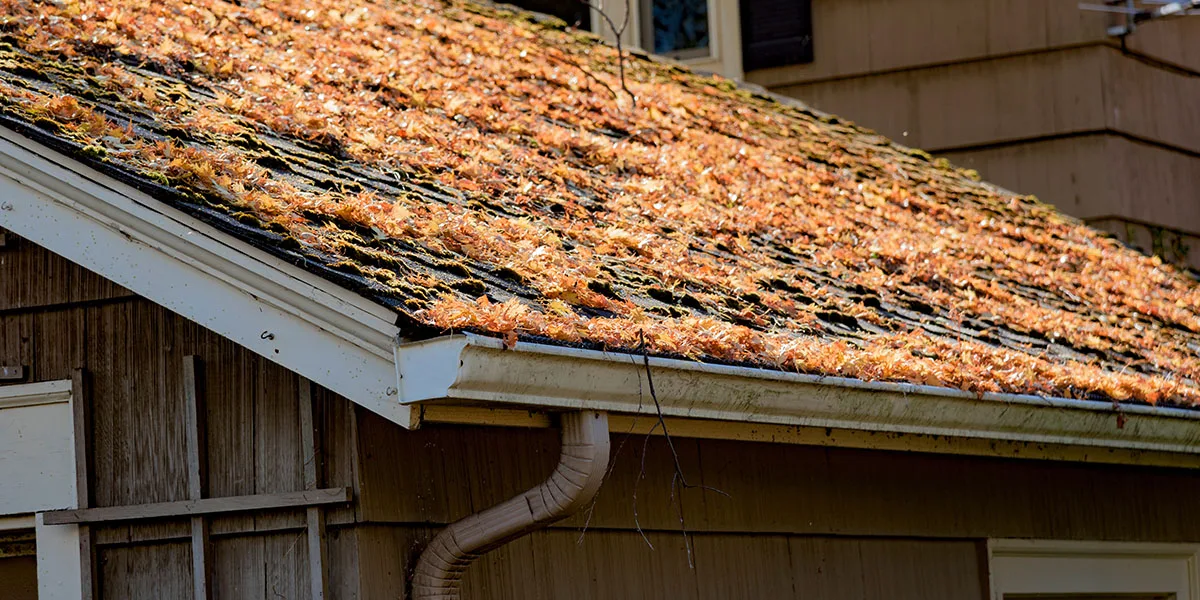
This is the most common cause by far. Leaves, seeds, twigs, and shingle granules collect in the trough and eventually block the downspout opening. Downspouts often clog at the top elbow, where debris gets caught in the bend.
In Hamilton's older neighbourhoods with mature trees, this tends to peak from mid-October through November. Once the downspout is blocked, the trough fills up and water has nowhere to go but over the edge.
The clue: Overflow is worst near the downspout, or the entire run fills up quickly during rain.
2. Eavestroughs That Are Too Small for Your Roof
Many older homes were built with 5-inch eavestroughs. That size works for plenty of houses, but larger roofs, steeper roofs, and roofs that funnel water from several slopes onto one section can send more water than a 5-inch trough can carry during a heavy rain. In those cases, a 6-inch system is often the better fit.
The clue: Overflow happens along the whole length of the trough during heavy rain, even when the eavestroughs are clean.
3. Not Enough Downspouts, or Downspouts That Are Too Small
Even a properly sized trough will overflow if water can't leave it fast enough. A long run with only one downspout at the end can back up in a downpour. As a general rule of thumb, longer runs benefit from a downspout every 30 to 40 feet. Upgrading from standard 2 x 3 inch downspouts to larger 3 x 4 inch downspouts can also make a noticeable difference.
The clue: Clean troughs still fill and overflow, especially on long sections of the house.
4. Incorrect Slope or Sagging Sections
Eavestroughs need a gentle slope toward the downspout so water keeps moving. A common guideline is roughly a quarter inch of drop for every 10 feet. If a trough was installed too flat, or with the slope running the wrong way, water sits instead of draining.
Hangers also loosen over time, especially after a few winters of ice and snow load. That creates low spots that collect water and spill over.
The clue: Overflow in the middle of a run, standing water left in the trough after the rain stops, or a visible dip when you look along the roofline.
5. Water Overshooting at Roof Valleys
A roof valley is where two roof slopes meet. Water from both sides concentrates in the valley and moves fast, and during a heavy rain it can shoot right past the eavestrough at the inside corner. A valley splash guard or a larger trough at that corner usually solves it.
The clue: Overflow at inside corners only, mostly during downpours.
6. Ice and Frozen Debris
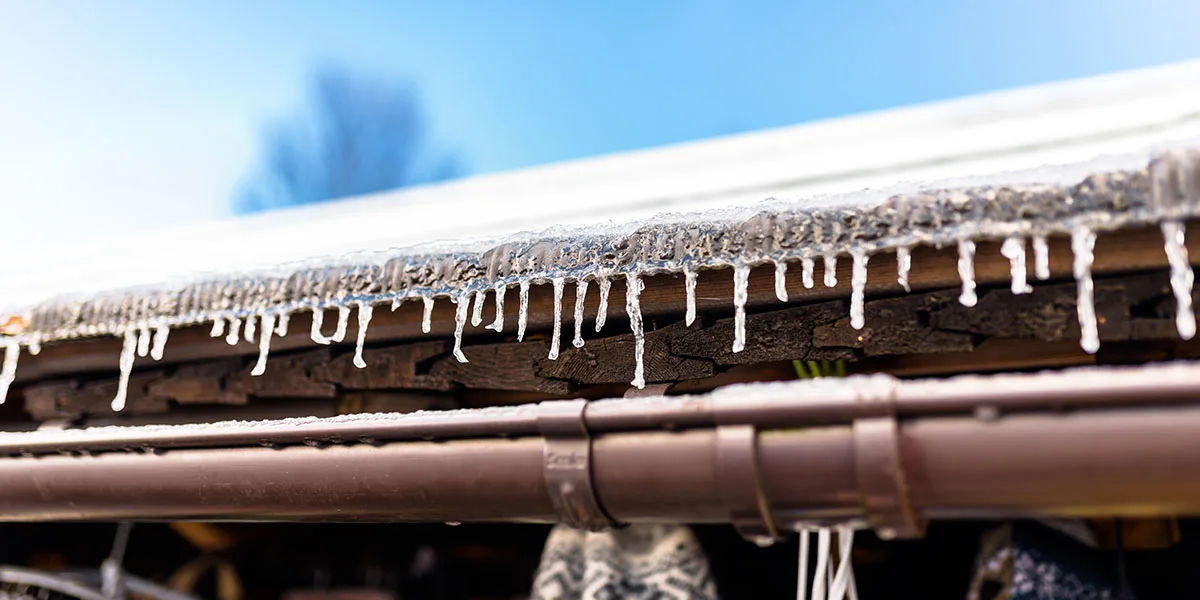
From late fall into spring, debris left in the troughs can freeze solid. Ice dams along the roof edge can also block the trough. When temperatures climb above freezing during the day, meltwater has nowhere to drain and spills over, then refreezes overnight.
The clue: Overflow or heavy icicles during thaw days, usually after a stretch of cold weather.
Is It Actually Overflowing? A Common Look-Alike
Sometimes water appears to be overflowing when it's actually dripping behind the eavestrough. This usually means there's a gap between the roof edge and the trough, or the drip edge flashing is missing or installed incorrectly. It's a different problem with a different fix, and it's worth looking closely before deciding what's wrong, because water running behind the trough goes straight onto your fascia.
How to Diagnose the Problem
The best time to check is during a moderate to heavy rain. Stay on the ground and watch where the water is going. Use this as a quick guide:
| Where you see overflow | Most likely cause |
|---|---|
| Near a downspout | Clogged downspout |
| Along the full length, even when clean | Troughs too small or too few downspouts |
| In the middle of a run | Sagging section or incorrect slope |
| At inside corners | Water overshooting from a roof valley |
| Behind the trough | Gap at the roof edge or missing drip edge |
| During thaw days | Ice or frozen debris |
Once the rain stops, look for standing water in the troughs, stains on the siding below, and washed-out spots in garden beds. Each one tells you where water has been going.
What You Can Handle Yourself and When to Call a Professional
Some homeowners are comfortable clearing debris from a single-storey roofline and adding downspout extensions to move water further from the foundation. If you do any ladder work, take it seriously, and avoid it entirely in wet or icy conditions.
Most other causes need a professional fix:
- Replacing undersized troughs with a larger system
- Adding downspouts or upgrading their size
- Re-pitching troughs and replacing loose or failing hangers
- Installing valley splash guards
- Correcting drip edge issues at the roofline
Not every overflow problem means you need a new system. A few loose hangers or one blocked downspout can usually be repaired. If you're weighing your options, our article on Eavestrough Repair vs. Replacement: How to Know Which You Need covers how to tell the difference.
Preventing Overflow Long Term
Once the immediate problem is fixed, a few upgrades can keep it from coming back:
- Leaf guards keep most debris out of the trough, which cuts down on clogs and the maintenance that comes with them. If you have evergreens nearby, see Do Leaf Guards Work with Pine Needles?
- Seamless eavestroughs have fewer joints where debris can catch and leaks can start.
- Larger downspouts in the right locations help the system keep up during heavy rain.
- Regular checks after major storms and before winter catch small problems early.
Keep in mind that leaf guards solve clog-related overflow, but they won't fix a trough that's too small or sloped incorrectly. Getting the cause right matters before choosing the fix.
Getting Overflowing Eavestroughs Fixed in Hamilton
Mario Aluminum has been installing and repairing eavestroughs across Hamilton, Stoney Creek, Burlington, Oakville, Ancaster, Waterdown, and Mississauga for over 20 years. If your eavestroughs are overflowing, we'll find the cause and tell you honestly whether it needs a repair or a larger fix. If a repair will do the job, that's what we'll recommend.
Frequently Asked Questions
If clean eavestroughs still overflow, the most likely causes are troughs that are too small for your roof, too few downspouts, or a slope that doesn’t move water toward the downspouts. Overflow at inside corners usually points to water overshooting from a roof valley.
Occasional overflow during an extreme downpour can happen even on a well-designed system. Regular overflow during ordinary rain is not normal and usually means there’s a clog, a sizing issue, or a slope problem.
Leaf guards prevent overflow caused by clogs, which is the most common cause. They won’t fix overflow caused by undersized troughs, too few downspouts, or incorrect slope.
Look for standing water in the troughs after the rain stops. If water sits in sections instead of draining, or you can see a dip along the roofline, the slope likely needs adjusting or the hangers need to be replaced.
Yes. Overflow drops water right beside the foundation, and over time that can lead to basement leaks and moisture problems, especially when saturated soil freezes and thaws through the winter.
Contents