Article Summary
Most homeowners who notice a problem with their eavestroughs face the same question: is this something that can be fixed, or is it time to replace the whole system? This article gives Ontario homeowners a clear framework for making that call, covering the specific problems that fall into repair territory, the signs that point toward replacement, and the factors that determine which direction delivers better value over time.
A leaking joint. A section that sags noticeably lower than the rest of the run. Water overflowing the front edge during a rainstorm. These are the signs that bring most Hamilton-area homeowners to the decision point between repairing their eavestroughs and replacing them entirely.
The right answer is not always obvious from the symptom alone. A leaking joint might be a simple reseal or the leading indicator of a system that has been failing quietly for years. A sagging section might be a single loose hanger bracket or the beginning of widespread fascia damage. Getting the diagnosis right before deciding on the scope of work saves money either way: repair costs when repair is genuinely sufficient, and replacement costs when a repair will just buy a short reprieve before the next problem appears.
At Mario Aluminum, we assess eavestroughs across Hamilton, Stoney Creek, Burlington, Oakville, Ancaster, and Waterdown every week. Here is the framework we use to tell the two situations apart.
The Core Question: Is This a Contained Problem or a System Problem?
The decision between repair and replacement comes down to one central question: is the problem you can see contained to a specific location, or is it a symptom of issues that affect the system more broadly?
Contained problems are candidates for repair. System-level problems are candidates for replacement. The challenge is that a single visible symptom does not always tell you which situation you are in. A leaking joint, for example, might be a contained failure at one connection. Or it might be the first joint to fail in a system where the sealant has aged out across multiple connections and others will follow within a season or two. The visible symptom is the same in both cases; the appropriate response is not.
A physical inspection of the full system, not just the problem area, is the reliable way to answer this question. Walking the full perimeter of the home and checking every visible joint, hanger bracket, and section for signs of sagging, separation, or rust staining gives you the picture you need to make a well-informed call.
When Repair Is the Right Answer
Repair is appropriate when the problem is genuinely isolated and the rest of the system is in sound condition. The following situations consistently point toward repair:
A Single Leaking Joint
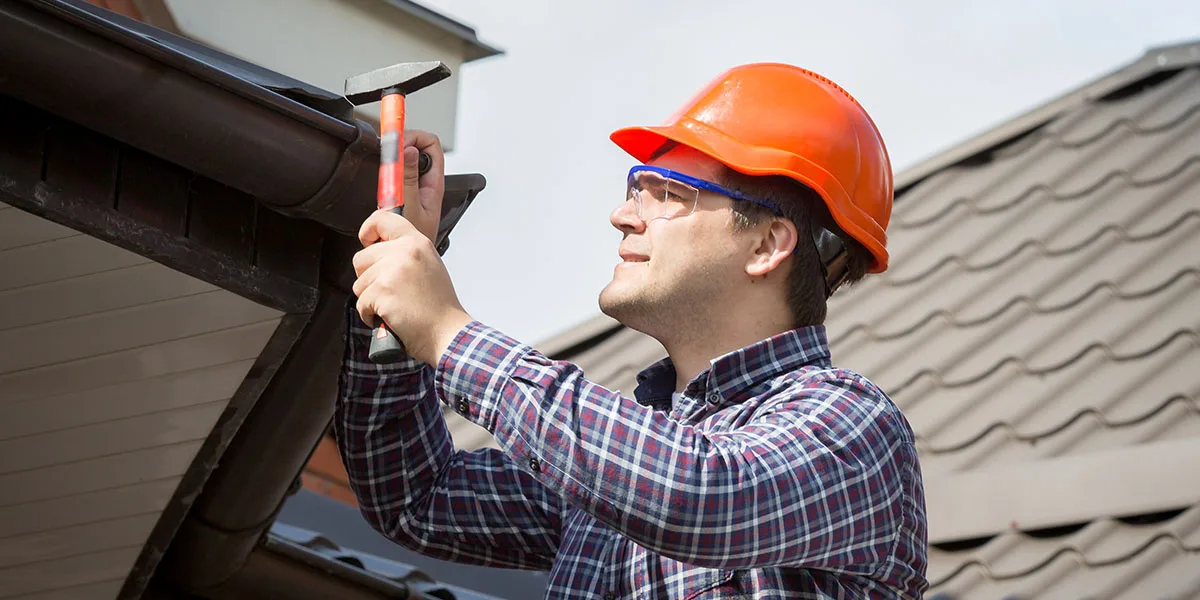
Sectional eavestrough systems develop joint leaks as sealant ages. A single leaking joint on a system where all other connections are intact and the eavestroughs are less than 15 years old is a straightforward repair: remove the old sealant, clean the joint surfaces, and apply fresh compatible sealant. This is a relatively low-cost fix with a reasonable service life if the rest of the system is sound.
One Loose or Failed Hanger Bracket
Hanger brackets occasionally pull away from the fascia, especially on sections that carry higher debris or ice load. A single bracket failure that has caused localised sagging on an otherwise functional system is repairable. Re-securing the hanger and verifying that the fascia behind it is solid resolves the problem without disturbing the rest of the installation.
A Disconnected or Damaged Downspout
Downspouts that have separated at a joint, been knocked loose, or are directing water inadequately can be repaired or replaced independently of the main eavestrough runs. This is one of the most straightforward repairs in the category and rarely points toward full system replacement.
Storm or Impact Damage to a Specific Section
Damage caused by a falling branch, ice load, or a specific weather event is typically localised. If the damage is confined to a section or two and the rest of the system is performing well, section replacement or targeted repair is appropriate.
A useful benchmark: if you are addressing the same eavestrough problem for the second time within two years, the underlying cause has not been resolved. Recurring problems in the same location, or new problems appearing in different locations on the same system, signal a shift from repair territory to replacement territory.
When Replacement Is the Right Answer
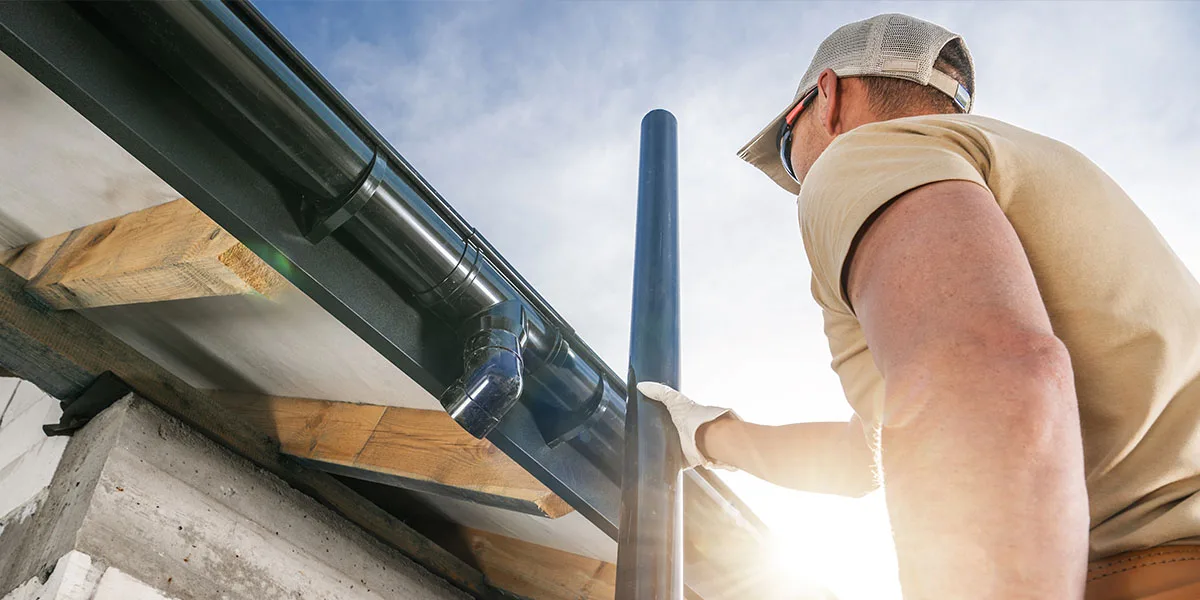
Several clear indicators consistently point toward full replacement rather than ongoing repair. Recognising them early avoids the pattern of incremental repair costs that eventually add up to more than a new system would have cost.
The System Is More Than 20 Years Old
Aluminum eavestroughs in Ontario typically have a service life of 20 to 30 years for sectional systems and 25 to 40 years for seamless aluminum. A sectional system that is more than 20 years old and showing visible issues has reached the stage where repair tends to produce diminishing returns. Sealant that has aged out at one joint has likely aged out at others. Hanger brackets that are pulling away in one location are under the same cumulative stress across the full run.
Multiple Joints Failing Across the System
When a walk-around reveals failing or failed sealant at several joints, you are looking at a system-level maintenance problem rather than an isolated failure. Resealing every joint adds up in cost, needs to be repeated on a cycle as the new sealant ages, and does not address the underlying material age. At that point, replacement with a seamless system that eliminates the joint failure mode entirely is often the more economical long-term decision.
Widespread Sagging Across Multiple Sections
Sagging that affects one section points to a hanger issue. Sagging across multiple sections, or a system that consistently loses its slope between cleanings as brackets pull progressively further from the fascia, indicates that the fascia behind the system has softened and can no longer hold fasteners reliably. This situation requires fascia repair or replacement before any eavestrough work, and at that point the economics typically favour installing a new eavestrough system at the same time.
Fascia Damage Behind the Eavestroughs
Eavestroughs that have been leaking at joints or overflowing consistently have been depositing water against the fascia behind them. Fascia that has softened with rot cannot support a reliable eavestrough installation regardless of whether the gutters are repaired or replaced. The right sequence is to repair the fascia first and then install new eavestroughs. Repairing old eavestroughs on damaged fascia simply means the system will fail again for the same reason.
Persistent Overflow Despite a Clear System
If your eavestroughs overflow during moderate rainfall even when they are clear of debris, the problem is slope or capacity. Both require system-level intervention: restoring slope means repositioning and refastening hanger brackets across an affected run, and adding capacity means upsizing the profile or adding downspouts. These are replacement-scale projects rather than repairs in the conventional sense.
One More Consideration: Repair a Sectional System or Switch to Seamless?
If your existing system is sectional and is approaching or past the point where full replacement makes sense, the replacement decision also involves a material choice. Replacing sectional eavestroughs with another sectional system preserves the same joint failure pattern that led to the current situation. Upgrading to seamless aluminum at the same time eliminates mid-run joints entirely, removing the primary maintenance burden from the new system from day one.
Seamless aluminum costs more per linear foot than sectional, but the reduced maintenance and extended service life typically make it the better long-term value for most Ontario homeowners. If you are investing in a full replacement anyway, the incremental cost of going seamless is worth considering.
Frequently Asked Questions
The clearest signs of fascia damage visible from the ground are peeling or bubbling paint on the fascia board, visible staining or discolouration, and eavestroughs that are pulling away from the roofline despite the hangers appearing intact. Pressing gently on the fascia where you can reach it is also informative: wood that compresses or feels soft has begun to rot. If your eavestroughs are consistently pulling away from the fascia, or if you can see a gap forming between the gutter and the board above it, a professional assessment of the fascia condition is worth arranging before any repair or replacement work begins.
Minor repairs such as resealing a single joint or refastening a hanger bracket typically run $100 to $300 depending on access conditions and the contractor’s minimum service call. Section replacement on a sectional system runs $150 to $400 per section. For more extensive repairs involving multiple joints or downspout replacement, costs typically fall in the $300 to $800 range. If the assessment reveals that fascia repair is also needed, that adds to the project cost. A free on-site assessment gives you an accurate number for your specific situation.
Some eavestrough repairs are within reach for homeowners comfortable working safely on a ladder. Resealing a single leaking joint, reattaching a loose hanger bracket, and clearing a blocked downspout are all tasks that do not require specialised equipment or expertise. Multi-storey homes, widespread issues, or any situation involving the fascia behind the gutters are better handled professionally. If there is any uncertainty about safe ladder access or the full scope of the problem, a professional assessment is the more reliable starting point.
Not Sure Which Situation You Are In? We Can Help.
The repair versus replacement question is one we answer on a free on-site basis across Hamilton and surrounding communities every day. We will take an honest look at your full system, assess the condition of the fascia behind it, and give you a straight answer on whether repair or replacement makes more sense for your home and your budget.
There is no obligation and no pressure toward the larger scope. If targeted repair is the right answer, that is what we will recommend.
Free on-site eavestrough assessments available across Hamilton, Stoney Creek, Burlington, Oakville, Ancaster, and Waterdown. Call us to schedule yours.
Call us at (289) 993-5566 or request a free quote online.