If you've received a quote for exterior renovation work and seen the words soffit and fascia on the estimate, you're not alone in wondering exactly what those terms refer to. They're among the most frequently searched exterior home terms — and among the least understood by homeowners who don't work in construction.
The short version: soffit and fascia are two components that work together at the edge of your roofline. They protect structural elements that would otherwise be exposed to weather, support your eavestrough system, and regulate airflow through your attic. They're not glamorous, but they're doing important work every day — and when they fail, the consequences reach further than most homeowners expect.
This guide explains what each component is, where it sits on your home, what it does, and what the warning signs of failure look like. If you're a Hamilton homeowner trying to make sense of an exterior renovation quote or a home inspection report, this is a plain-language breakdown of everything you need to know.
Where Soffit and Fascia Are Located
To understand what soffit and fascia do, it helps to picture the edge of your roofline — the point where your roof overhang meets the exterior wall of your home. This area has a few distinct surfaces that most people walk past every day without registering:
- The fascia is the vertical board that runs horizontally along the very edge of the roof overhang, facing outward. If you stand in front of your home and look up at the roofline, the board running across the bottom edge of the roof — the one your eavestroughs are typically mounted to — is the fascia.
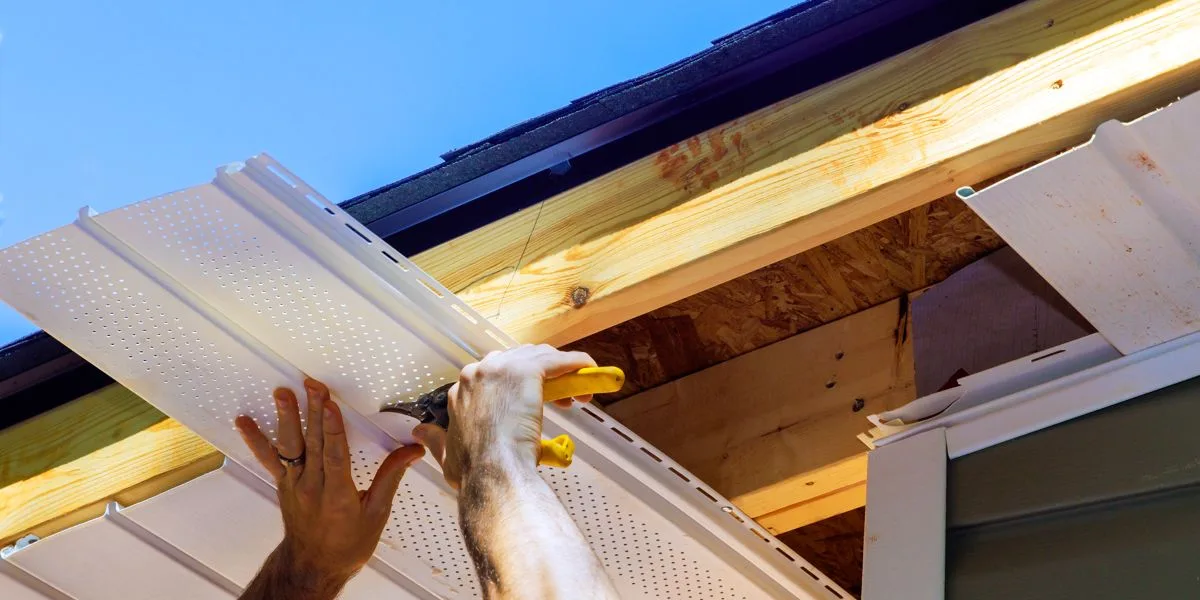
- The soffit is the material that covers the underside of the roof overhang — the horizontal surface between the fascia and the exterior wall of your home. If you stand close to your house and look up at the overhang above you, the surface you're looking at is the soffit.
Together, these two components enclose the structural elements at the roof edge — the rafter tails and roof deck that would otherwise be exposed to weather — while creating the finished, polished look that most people associate with a well-maintained roofline.
A simple way to remember the difference: fascia faces outward and supports your eavestroughs. Soffit faces downward and ventilates your attic.
What is Fascia?
Fascia is the board that runs along the lower edge of your roofline, sitting vertically between the roof overhang and the eavestroughs mounted to its front face. In older homes, fascia was almost universally made from wood — typically one-by-six or one-by-eight boards painted to match the exterior trim. In modern construction and renovation, aluminum and vinyl fascia have largely replaced wood in most applications.
What Fascia Does
Fascia serves several functions simultaneously, which is part of why its condition matters more than its understated appearance might suggest:
- Supports the eavestrough system: Your eavestroughs are mounted directly to the fascia board. The structural integrity of the fascia determines how securely your gutters are anchored — and a fascia board that has softened with rot or pulled away from the rafter tails will allow eavestroughs to sag, separate, and eventually fail.
- Protects rafter tails from weather exposure: The ends of your roof rafters — the structural members that extend out to form the overhang — terminate at the fascia line. Without fascia covering them, those rafter ends would be exposed to rain, snow, and ice. Rafter tail rot is one of the more expensive structural repairs a homeowner can face, and properly maintained fascia is what prevents it.
- Creates a finished roofline appearance: From a curb appeal standpoint, fascia provides the clean horizontal line across the roofline that gives a home a finished, well-maintained look. Peeling, stained, or visibly deteriorating fascia is immediately noticeable and affects both appearance and perceived home value.
Acts as a weather barrier at the roof edge: Fascia helps seal the transition point between your roof deck and the exterior wall, reducing the pathways through which wind-driven water and pests can access the structure.
Common Fascia Problems
Because fascia is exposed to weather on its front face and subject to moisture from above when eavestroughs overflow or leak, it is one of the more maintenance-intensive exterior components on a home — particularly when it's made from wood.
- Paint peeling, bubbling, or failing to adhere — typically the first visible sign of moisture damage
- Soft or spongy texture when pressed — indicates rot has begun in wood fascia
- Visible staining or discolouration from water running behind the eavestroughs
- Sections that have bowed, warped, or pulled away from the roof structure
- Eavestrough sagging or pulling away — often a symptom of fascia that can no longer hold fasteners securely
Wood fascia that has begun to rot needs to be replaced promptly. Rot spreads to adjacent wood — including the rafter tails behind the fascia and the roof deck above — and the repair cost increases significantly the longer deterioration is left unaddressed.

What is Soffit?
Soffit is the material that covers the underside of your roof overhang — the horizontal surface you see when standing close to your home and looking up. Like fascia, soffit in older homes was typically wood, while modern installations use aluminum or vinyl products that are more resistant to moisture and require far less maintenance.
Soffit comes in two main types, which serve different purposes and are often used in combination on the same home:
- Vented soffit has a series of small perforations or slots that allow outside air to flow up into the attic space. This airflow is a critical part of your home's ventilation system.
- Solid soffit has no perforations and provides a clean, uniform appearance but no ventilation. It's typically used in sections where attic ventilation is provided through other means, or in combination with vented panels to balance airflow.
What Soffit Does
Of the two components, soffit is arguably the more functionally complex. Its primary roles go well beyond appearance:
- Attic ventilation: This is the most important function of vented soffit, and the one most often overlooked by homeowners. Your attic requires a consistent flow of outside air to regulate temperature and manage moisture. Vented soffit allows cool, dry outside air to enter at the low point of the attic — the eaves — while warm, moist air exits through ridge vents or gable vents at the top. Without adequate soffit ventilation, attics overheat in summer and accumulate moisture in winter.
- Moisture and mold prevention: Inadequate attic ventilation allows warm interior air to condense on the underside of your roof deck during cold weather, creating the conditions for mold growth and wood deterioration. Proper soffit ventilation — working in combination with ridge vents — keeps the attic dry throughout the year.
- Ice dam prevention: In Ontario winters, heat escaping through a poorly ventilated attic warms the roof deck above it, melting snow that then refreezes at the cold eaves and forms ice dams. Ice dams can work water back under shingles, damage eavestroughs, and cause interior water intrusion. Maintaining proper airflow through vented soffit is one of the most effective preventive measures.
- Pest exclusion: Soffit that is intact and properly sealed is a barrier against birds, squirrels, bats, and insects looking for attic access. Gaps, cracks, and holes in deteriorating soffit are among the most common entry points for attic pests — and once animals are established in an attic, remediation becomes a significantly more complex and expensive problem.
Structural enclosure: Like fascia, soffit encloses the structural elements of the roof overhang — protecting rafter tails and the underside of the roof deck from direct weather exposure.
Common Soffit Problems
- Sagging or loose sections — often caused by moisture damage to the underlying framing or pest activity
- Holes or gaps that provide access for birds, squirrels, and insects
- Blocked or crushed vents — reduces attic airflow, contributing to moisture and ice dam problems
- Paint peeling or surface deterioration on wood soffit
- Water staining on the underside — indicates water is getting in from above, typically from a failing roof edge or blocked eavestroughs
- Visible pest damage — chewed edges, disturbed material, or nesting debris visible from below
Why Soffit and Fascia Matter Especially in Ontario's Climate
Soffit and fascia perform important functions in any climate, but the specific demands of Southern Ontario's weather make their condition particularly consequential for Hamilton homeowners.
Freeze-Thaw Cycling
Hamilton experiences dozens of freeze-thaw cycles each winter — periods where temperatures cross above and below zero repeatedly over the course of days or weeks. This cycling is one of the most destructive forces acting on exterior materials. Water that infiltrates small gaps in aging fascia or soffit expands when it freezes, widening those gaps incrementally. Over several winters, what began as a minor paint crack becomes an open seam. Materials that handle this stress poorly — particularly older wood products — deteriorate noticeably faster in Hamilton's climate than in regions with more stable winters.
Heavy Precipitation and Snow Load
Eavestroughs in Hamilton have to handle significant water volume during spring rainfall events and snowmelt. When eavestroughs overflow — whether from blockage, inadequate slope, or insufficient capacity — that water runs directly down the fascia face. Fascia that is in good condition sheds this water without damage. Fascia with failing paint or compromised wood absorbs it. Over multiple overflow events, even minor fascia damage accelerates rapidly.
Attic Performance in Cold Months
Southern Ontario winters create sustained cold temperatures that make attic ventilation a genuine structural concern rather than a building code formality. An attic that is trapping warm, moist air because soffit vents are blocked or inadequate will show measurable condensation on the roof deck within a single winter season. Over several years, that moisture contributes to mold, insulation degradation, and premature roof aging. Maintaining clear, functional soffit ventilation is one of the most cost-effective things a Hamilton homeowner can do to protect their roof and attic.
Soffit and Fascia Materials: Wood vs. Aluminum vs. Vinyl
Understanding the material options helps when evaluating quotes or deciding whether to repair or replace aging components.
Wood
The traditional material, still found on most homes built before the 1990s. Wood fascia and soffit can be painted to match any exterior colour scheme and has an authentic appearance that some homeowners prefer. The significant drawback is maintenance: wood requires repainting every five to eight years, is vulnerable to moisture and rot, and is susceptible to pest damage. In Ontario's climate, wood soffit and fascia that isn't regularly maintained deteriorates noticeably faster than in drier regions. Most exterior renovation contractors — including our team — recommend upgrading from wood to aluminum or vinyl when replacement is needed.
Aluminum
The most widely used material for soffit and fascia replacement in Southern Ontario. Aluminum is highly resistant to moisture, doesn't rot, holds paint well, and is strong enough to resist wind load and the weight of ice without deforming. It is available in a wide range of colours and profiles, including vented configurations for soffit. Aluminum fascia and soffit installed with proper fastening and sealed joints can last several decades in Ontario's climate with virtually no maintenance beyond occasional cleaning.
Vinyl
A lower-cost alternative to aluminum that performs well in moderate climates but has some limitations in the freeze-thaw conditions common to Southern Ontario. Vinyl becomes brittle in sustained cold and is more prone to cracking under impact during winter months. For soffit specifically, vinyl vented panels are a common and cost-effective choice. For fascia — where structural rigidity and the ability to hold eavestrough fasteners securely are important — aluminum is generally the stronger recommendation in this climate.
When replacing soffit and fascia, colour matching to your existing siding, trim, and eavestroughs is straightforward with both aluminum and vinyl products. A well-matched roofline significantly improves curb appeal and creates a cohesive exterior appearance.
When Should Soffit and Fascia Be Replaced?
The answer depends on what you find during inspection, but some situations consistently point toward replacement rather than repair:
- Wood fascia with rot that has spread beyond isolated sections — rot in fascia boards travels to adjacent wood quickly
- Soffit sections that have sagged, detached, or show evidence of pest access — gaps that animals have used once will be used again
- Blocked or deteriorated vents that can't be cleared or repaired in place
- Paint that is failing repeatedly despite regular repainting — typically indicates the wood substrate has degraded
- Eavestroughs that are consistently pulling away from the fascia — the fascia can no longer hold the fasteners securely
- Any wood soffit or fascia on a home that is 20 or more years old with no prior replacement — the maintenance cycle alone often makes replacement the more economical choice
Replacement is also worth considering proactively when undertaking related exterior work. If your eavestroughs are being replaced, your siding is being updated, or your roof is being re-shingled, having soffit and fascia assessed and replaced at the same time avoids a second mobilization cost and ensures a cohesive finished result.
Questions About Your Soffit or Fascia? We Can Help.
Soffit and fascia don't announce their problems the way a leaking roof or a cracked foundation wall does. They deteriorate quietly, doing damage that becomes apparent only when it has progressed to something more expensive to fix. The best time to have them assessed is before there's a visible problem — and the second-best time is as soon as one becomes apparent.
Mario Aluminum provides professional soffit and fascia installation and repair for homeowners across Hamilton, Stoney Creek, Burlington, Oakville, Ancaster, and Waterdown. Whether you're dealing with failing wood components, soffit that has developed pest access points, fascia that can no longer hold your eavestroughs, or simply aging material you'd like to upgrade to low-maintenance aluminum, our team can assess your roofline and give you an honest recommendation.
Every assessment starts with a free on-site quote and an explanation of what we find — no pressure, no technical jargon, and no recommendation for work that isn't genuinely needed.
Aluminum soffit and fascia installed properly will outlast the wood components on most Hamilton homes by decades — and eliminate the maintenance cycle of scraping, priming, and repainting that wood demands every few years.
Call us at (289) 993-5566 or request a free quote online to schedule your soffit and fascia assessment.