Article Summary
Sagging soffit is a problem that most Ontario homeowners notice but few fully understand. This article identifies the three root causes behind soffit sag: moisture damage and rot in the underlying framing, pest activity that physically compromises soffit panels and structural members, and general material deterioration in aging wood soffit systems. For each cause, the article explains the mechanism, the visible signs, and the appropriate response. A FAQ section and closing CTA round out the piece.
Sagging soffit is one of those exterior problems that homeowners tend to notice and then quietly defer. It does not look as urgent as a leaking roof or a cracked foundation. It does not announce itself with water in the basement or a draft through a window. It just sits there, slightly off, slightly wrong, and easy to add to a future project list that never quite gets prioritized.
That deferral is a mistake, and understanding why requires understanding what soffit actually does. The material covering the underside of your roof overhang is not decorative trim. It regulates attic airflow, protects structural rafter tails from weather exposure, and seals your home against pest entry. When it sags, one or more of those functions is already compromised. And when soffit sags without being addressed, the underlying cause almost always continues to progress.
At Mario Aluminum, we have been assessing and replacing soffit systems across Hamilton and the surrounding area for over 20 years. In that time, sagging soffit traces back to three root causes in the vast majority of cases. This article explains each one, what it looks like from the outside, and what the appropriate response is.
Why Soffit Sags: The Three Root Causes
Soffit panels do not sag on their own. They sag because something has changed in the structure supporting them or in the material itself. Correctly diagnosing which cause is at play determines whether the right response is a panel replacement, a structural repair, or a more comprehensive intervention.
Cause 1: Moisture Damage and Rot in the Underlying Framing
Moisture is the most common driver of soffit sag in Ontario homes, and it operates in a way that is not always intuitive. The soffit panel itself is often not where the moisture damage is most severe. The panel sags because the framing behind it has deteriorated.
How Moisture Reaches the Soffit Framing
The underside of your roof overhang is exposed to weather on its lower face, but it is also exposed to moisture from above. When eavestroughs overflow, leak at joints, or discharge water back against the fascia, that water does not simply run down the exterior wall. It infiltrates behind the fascia, contacts the ends of the rafter tails, and eventually reaches the lookout framing and nailer boards that support the soffit from above.
In older homes with wood soffit systems, this moisture exposure is particularly consequential. Wood that is intermittently wet and dry through Ontario's seasonal cycle absorbs and releases moisture repeatedly. Paint that seals the wood surface delays this process but does not prevent it indefinitely. Once paint begins to fail, the wood beneath it becomes fully exposed to moisture cycling, and rot follows within a few seasons.
Blocked or inadequate soffit vents compound the problem significantly. When attic airflow is restricted, warm moist air that accumulates in the attic during cold months has nowhere to go. It condenses on the underside of the roof deck and on the framing at the eave, adding interior moisture exposure to the exterior moisture the framing is already managing. The result is framing that is wet from both directions.
What to Look For
Moisture-driven soffit sag tends to present with a cluster of visible indicators rather than sag in isolation:
- Soffit panels that have visibly dropped or bowed downward along one or more sections
- Paint on adjacent fascia boards that is peeling, bubbling, or showing brown staining
- Soft or spongy areas when you press gently on the underside of the soffit
- Discolouration or dark staining on the soffit surface, particularly near the fascia junction
- Eavestroughs that are pulling away from the fascia above the sagging section
How Serious Is It?
The severity of moisture-driven soffit sag depends on how far the rot has progressed into the framing. Soffit panels that have sagged because their nailer boards have softened represent a contained repair if addressed promptly. Rot that has progressed into rafter tails requires structural intervention before any cosmetic replacement makes sense. Left unaddressed, rafter tail rot can compromise the roof edge itself, elevating a soffit repair into a roofing and structural project.
Moisture damage in soffit framing does not reverse on its own. Every season the problem goes unaddressed, the rot progresses further into structural members that are progressively more expensive to repair.
Cause 2: Pest Activity and Physical Damage to Soffit Panels
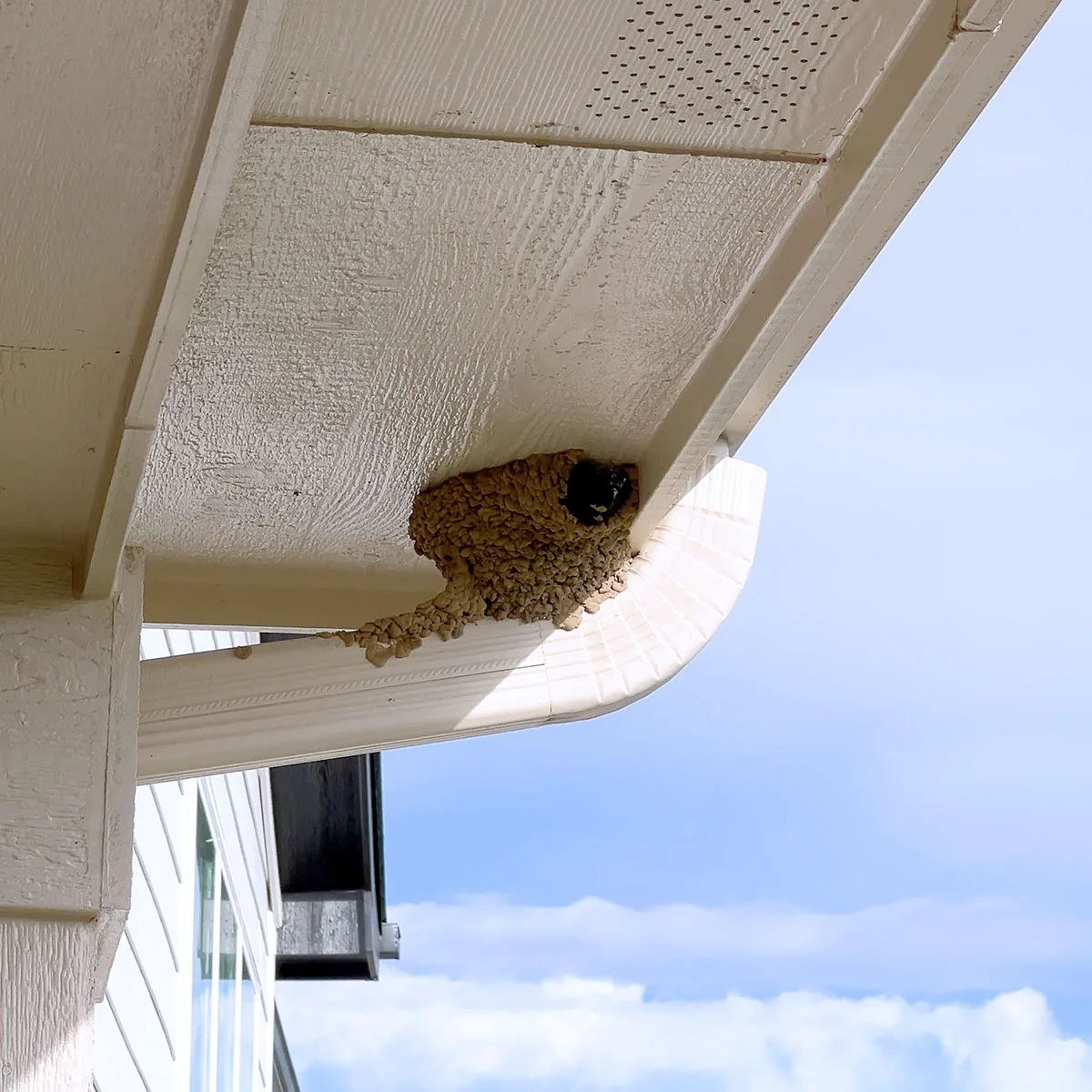
Ontario's spring and summer months bring a reliable pattern of pest pressure on home exteriors. Squirrels, birds, wasps, and in some cases raccoons actively seek gaps and entry points in soffit systems as nesting sites. Soffit that is already aging, has developing gaps at the fascia junction, or has visible cracks or paint failure is a more attractive target than intact material, but pest activity can create or enlarge entry points in otherwise serviceable soffit as well.
How Pests Cause Soffit to Sag
The mechanism by which pest activity leads to soffit sag is usually physical. Squirrels and raccoons that have identified a potential entry point will work at the soffit panel edge, pulling it away from the nailer or widening an existing gap until an entry point forms. This physical manipulation detaches the panel from its fastening and allows it to drop. The sagging is visible and immediate rather than gradual.
Wasps and other insects that nest within the soffit cavity contribute differently. Their nest material accumulates between the soffit panel and the roof deck, adding weight that the panel's fasteners were not designed to carry. Over a full nesting season, a large wasp nest can add enough mass to visibly deflect a soffit panel.
Beyond the sagging itself, pest activity introduces a compounding problem: once an entry point exists in soffit, it is used repeatedly. Animals that have accessed an attic through a soffit gap return to the same site. Subsequent occupants enlarge the opening further. Nesting material introduces moisture into the attic. Animal waste and decomposing organic material accelerate deterioration of the framing around the entry point. A pest-related soffit gap that goes unaddressed for a full season frequently requires not just panel replacement but framing repair and attic remediation by the time it is addressed.
What to Look For
Pest-related soffit sag has a distinct visual profile that differs from moisture-driven sagging:
- Soffit panels with clearly defined holes, chewed edges, or torn sections rather than gradual bowing
- Visible gaps at the junction between the soffit panel and the fascia board above it
- Nesting material visible through gaps or protruding from openings
- Noise from within the soffit cavity during early morning or evening hours, particularly in spring
- Staining on the soffit surface below an entry point from animal activity
- Wasp activity concentrated around a specific section of soffit during warmer months
The right time to address a pest-related soffit gap is as soon as it is discovered. Spring is when nesting pressure is highest, and a gap found in April that is deferred to fall has typically hosted a full season of occupancy and the damage that comes with it.
Cause 3: Material Deterioration in Aging Wood Soffit Systems
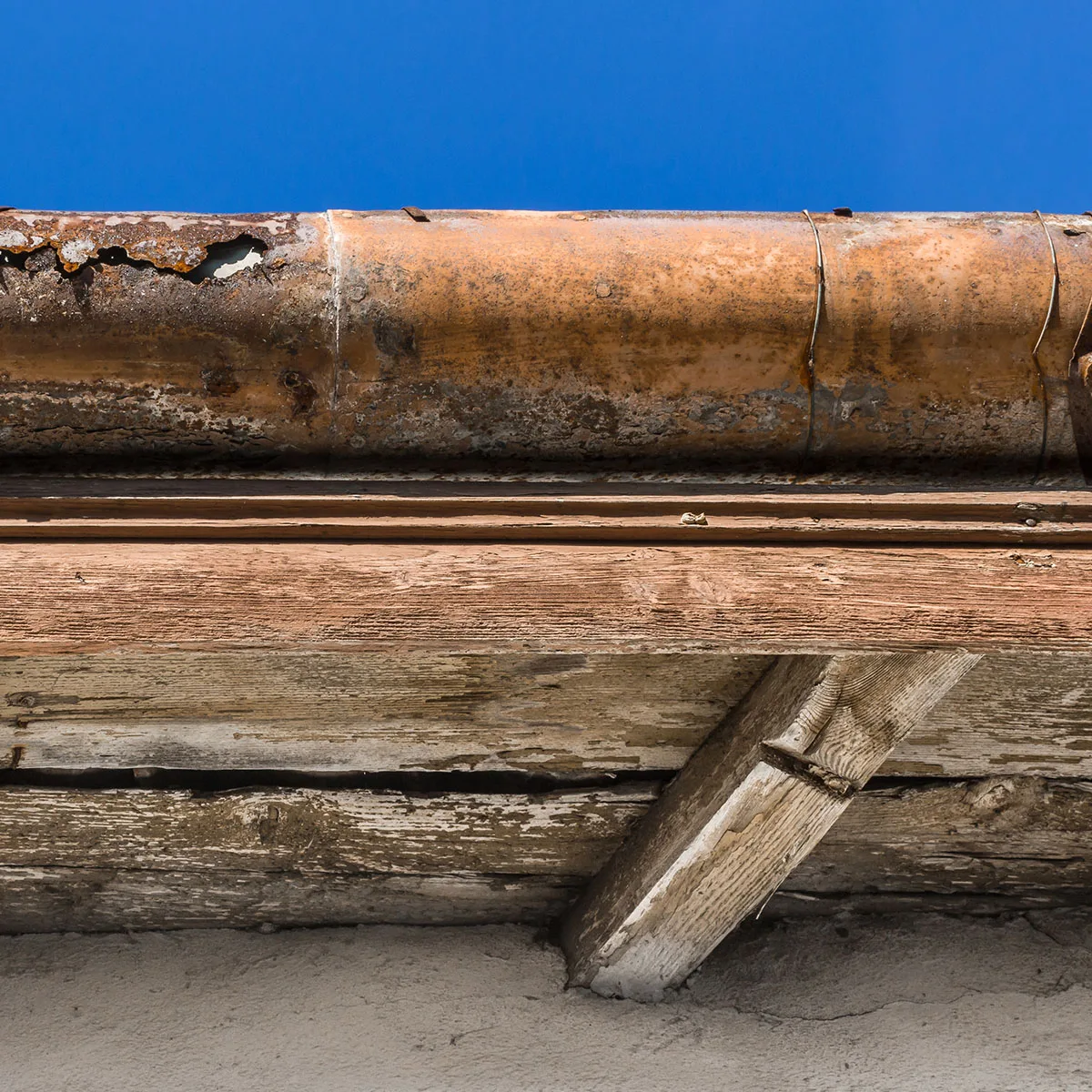
The third cause of soffit sag is the most straightforward, though it is no less important to address promptly. Wood soffit systems that were installed before the 1980s and 1990s, when aluminum and vinyl alternatives became standard, are now well past their designed service life in most cases. Material deterioration in these systems is a function of age rather than a specific triggering event.
How Age-Related Deterioration Leads to Sag
Wood soffit panels that have not been actively maintained through the repainting cycles they require are particularly susceptible. When paint film integrity is lost, the wood beneath it begins absorbing ambient moisture from rainfall, humidity, and condensation. The cyclical expansion and contraction of the wood as it absorbs and releases moisture gradually loosens the fasteners that hold the panel in place. Over years of cycling, panels that were once securely fastened develop enough play to visibly sag under their own weight.
Even wood soffit that has been reasonably maintained reaches a point where the cumulative effects of age, UV exposure, and moisture cycling have degraded the material to the degree that it can no longer maintain a flat, secure installation. At this stage, repainting and re-fastening deliver diminishing returns. The panels continue to sag and require increasing attention to remain functional.
The Material Upgrade Case
Aging wood soffit systems that have reached this stage of deterioration represent a clear opportunity for a durable, permanent upgrade. Aluminum and vinyl soffit systems do not require painting, do not rot, and do not cycle through the moisture absorption process that progressively loosens wood panel fasteners. A properly installed aluminum soffit system on a Hamilton home will perform reliably for several decades without the maintenance cycle that wood demands.
For many homeowners managing wood soffit that has begun to sag through age-related deterioration, the economics of the decision are relatively clear. The cost of continued maintenance, the labor involved in periodic repainting, and the progressive nature of the deterioration combine to make replacement the more economical long-term choice in most cases.
What to Look For
Age-related deterioration presents differently from the first two causes because it tends to be more widespread across the full soffit rather than concentrated in a specific section:
- Multiple sections of soffit showing gradual downward bow rather than isolated panel failure
- Paint that is failing broadly across the soffit surface rather than in specific areas
- Fasteners that are visibly pulling through the panel material
- Soffit panels that respond to light upward pressure but drop back again when released
- Wood that feels dry and brittle at the edges rather than soft, distinguishing age deterioration from active moisture damage
How to Address Sagging Soffit: The Right Approach by Cause
Moisture Damage: Assess Before Replacing
Replacing a sagging soffit panel without assessing the framing behind it is one of the most common soffit repair mistakes. New panels installed over rotted framing will fail for the same reason the original panels did. Any soffit repair involving moisture-related sag should begin with an honest assessment of the nailer boards and rafter tails behind the panel. If framing damage is limited to the nailer, replacement of the nailer and panel is appropriate. If rot has reached the rafter tails, a structural repair is required before soffit replacement proceeds.
Addressing the moisture source is equally important. If the sagging soffit is associated with an overflowing or leaking eavestrough, repairing the soffit without addressing the eavestrough problem will produce the same result within a few seasons.
Pest Activity: Address the Entry Point and the Source
Pest-related soffit repair requires two distinct actions. First, the physical damage to the soffit panel and any compromised framing must be repaired and new material installed. Second, and equally important, the conditions that attracted the pest activity need to be addressed to prevent recurrence. This typically means ensuring that the new soffit installation closes all gaps at the fascia junction, uses appropriately robust material at corners and edges where pest pressure is highest, and is inspected for any adjacent vulnerabilities that represent alternative entry points.
Age-Related Deterioration: Replace with Low-Maintenance Aluminum
For wood soffit systems that have deteriorated through age, the appropriate response is full replacement with aluminum or vinyl. Partial replacement of the worst-affected sections is a reasonable short-term approach when budget constraints require phasing the project, but the remaining sections will follow the same deterioration trajectory and require attention progressively. A full replacement with quality aluminum soffit eliminates the maintenance cycle permanently and provides attic ventilation performance that aging wood systems frequently cannot match.
Aluminum soffit installed properly by an experienced contractor requires no painting, resists rot and pest damage, and maintains its performance for decades. For most Ontario homeowners managing aging wood soffit, it is the most durable and cost-effective long-term solution available.
Frequently Asked Questions
For most residential properties, a full soffit replacement is completed in one to two days. The project involves removing the existing soffit panels, assessing and repairing any framing damage found, installing new aluminum or vinyl soffit in the appropriate vented and solid panel configuration, and completing the fascia junction with a clean, sealed finish. More complex homes with multiple roof levels, dormers, or significant framing repairs may require additional time. Your contractor can provide a realistic timeline as part of the on-site assessment and quote process.
Yes, in most cases. Sagging soffit panels frequently block or restrict the vented perforations that allow outside air to enter the attic at the eaves. Even partial restriction of these vents reduces attic airflow, contributing to heat buildup in summer and moisture accumulation in winter. Both conditions accelerate roof aging and increase the risk of ice dam formation during freeze-thaw cycling. Restoring proper attic ventilation is one of the most immediate functional benefits of a quality soffit repair or replacement, alongside the pest exclusion and structural protection that come with intact soffit.
Squirrels can create a functional entry point in deteriorating wood soffit within a single afternoon of focused effort. In intact aluminum or vinyl soffit, they are significantly less able to gain purchase, which is one of the practical advantages of aluminum soffit replacement over continued maintenance of aging wood systems. Once an entry point exists, it can be widened by subsequent occupants within days. The progression from a minor gap to a fully established nest site happens quickly during spring nesting season. Pest-related soffit damage should be treated as a time-sensitive repair rather than a deferred maintenance item.
The most reliable way to assess framing condition without removing the soffit panel is to press gently but firmly on the panel surface from below. If the panel compresses with any spring or give, and particularly if it does not return fully to its original position, the framing behind it has likely softened. A more definitive assessment requires removing the panel to inspect the nailer and rafter tails directly, which is typically part of what a professional contractor does during a repair assessment. If you can see staining or dark discolouration on the soffit surface near the fascia, or if the fascia board above shows paint failure or soft spots, framing rot is a likely contributing factor.
Minor soffit repairs, such as refastening a panel that has simply loosened from its nailer without any underlying rot or pest damage, are within reach for a homeowner comfortable working on a ladder. However, most sagging soffit involves at least one of the three root causes covered in this article, and properly diagnosing which cause is at play requires getting close enough to assess the framing condition. If there is any softness in the framing, evidence of pest activity in the soffit cavity, or associated fascia damage, professional assessment is the more reliable path. Replacing panels over undiagnosed rot or pest damage without addressing the root cause will produce a recurrence.
Protecting Your Roofline Starts with the Right Assessment
Sagging soffit is not a cosmetic inconvenience to schedule around. It is a signal that something has changed in the components that protect your roofline and ventilate your attic. Whether the cause is moisture working into framing from an overflowing eavestrough, pest activity that has established an entry point into your attic, or aging wood material that has simply reached the end of its reliable service life, the right response begins with an honest assessment rather than a panel replacement that covers the symptom without addressing the source.
Mario Aluminum brings over 20 years of exterior renovation expertise to every project we undertake across Hamilton, Stoney Creek, Burlington, Oakville, Ancaster, and Waterdown. Our soffit and fascia assessments start with the framing, not the panel, because we know that a repair built on an accurate diagnosis lasts. If your soffit has begun to sag and you are not certain of the cause, we will take a clear, no-pressure look at what is actually happening and give you a straightforward recommendation.
Quality workmanship, lasting materials, and honest advice: that is the standard we hold ourselves to on every project. It has been the foundation of our reputation in this community for more than two decades, and it remains the commitment behind every assessment and installation we deliver.
Every Mario Aluminum soffit assessment begins with the framing. Because a repair that addresses the symptom without the cause is not a repair worth making.
Call us at (289) 993-5566 or request a free quote online to schedule your soffit assessment.
Contents

- Why Soffit Sags: The Three Root Causes
- Cause 1: Moisture Damage and Rot in the Underlying Framing
- Cause 2: Pest Activity and Physical Damage to Soffit Panels
- Cause 3: Material Deterioration in Aging Wood Soffit Systems
- How to Address Sagging Soffit: The Right Approach by Cause
- Frequently Asked Questions
- Protecting Your Roofline Starts with the Right Assessment