Burlington is one of the most active exterior renovation markets in the GTHA. Its mix of lakeshore properties, established mid-century housing, and newer subdivisions near the escarpment creates diverse exterior conditions that a single generic renovation guide cannot adequately address. This article gives Burlington homeowners a locally grounded overview of the exterior renovation decisions that matter most in this community: siding selection and replacement, eavestrough systems, soffit and fascia, and window and door capping. It covers Burlington's specific climate conditions, the housing stock characteristics that shape the renovation decisions most residents face, and how to approach the contractor and material selection process with confidence.
Burlington homeowners invest significantly in their properties, and the exterior plays a larger role in protecting that investment than most people fully appreciate until something goes wrong. A home's exterior is not cosmetic cladding over a self-sufficient structure. It is an active protection system against Ontario weather, and in Burlington's specific climate conditions, it works hard for every year of its service life.
Burlington sits between Lake Ontario to the south and the Niagara Escarpment to the north, a geography that produces a specific combination of weather conditions. Lake moisture elevates humidity through the warmer months. Escarpment-adjacent communities experience wind and precipitation patterns that differ from the sheltered lakeshore south end. Freeze-thaw cycling through winter is relentless across the full city. And the spring rainfall season that follows each winter delivers high water volumes to eavestrough systems that may have spent the cold months accumulating damage.
This guide covers the exterior renovation decisions that Burlington homeowners face most commonly: siding, eavestroughs, soffit and fascia, and window and door capping. For each service, it explains what Burlington's conditions specifically require, what the signs of failure look like, and what a quality installation delivers.
Burlington's Housing Stock: Why It Matters for Exterior Renovation
Burlington's residential landscape spans a remarkably wide range of construction eras and styles. Understanding which category your home falls into helps clarify which exterior components are most likely to need attention and what the right approach looks like.
Lakeshore and South End Neighbourhoods
The communities closest to Lake Ontario, including Aldershot, LaSalle, and the older streets between Lakeshore Road and the QEW, contain a mix of post-war bungalows, 1960s and 1970s ranchers, and some older properties predating the city's significant growth periods. Many of these homes carry original or early-replacement aluminum siding, wood soffit and fascia systems, and sectional eavestrough installations that are now 30 to 50 years old. For homeowners in this housing cohort, exterior renovation often involves addressing multiple systems simultaneously as they reach the end of their useful lives around the same time.
Established Suburban Neighbourhoods
The bulk of Burlington's residential inventory was built between the late 1970s and the mid-1990s, in communities like Brant Hills, Headon Forest, Palmer, and Tansley. These homes typically feature vinyl siding or brick and vinyl combinations, with aluminum or vinyl soffit and fascia and sectional eavestrough systems installed during construction. As this housing stock ages into the 30 to 45-year range, vinyl siding from the original installation is showing the wear patterns common to that era, and eavestrough systems are developing the chronic joint failure and slope issues that come with aging sectional aluminum.
Newer North End Development
Burlington's continued growth has produced substantial newer residential development north of Dundas Street and in communities adjacent to the escarpment, including Alton Village and surrounding areas. Homes in this cohort are typically 10 to 25 years old and may still have years of service life remaining on their original exterior systems. For this group, the priority is usually monitoring rather than immediate replacement, with attention to early indicators that builder-grade materials installed at pace are beginning to show performance limitations.
Burlington's diverse housing stock means that the right exterior renovation approach for a 1965 lakeshore bungalow looks quite different from what a 1992 Headon Forest home needs. Understanding your home's construction era is the starting point for any exterior assessment.
Siding in Burlington: What the Local Climate Demands
Siding is the most visible exterior renovation project and often the most significant investment. In Burlington's climate, the performance demands on siding are meaningful.
What Burlington's Climate Does to Siding
Lake Ontario's proximity keeps relative humidity elevated through summer and early fall, which accelerates the degradation of siding materials that are not fully moisture-resistant. West and southwest-facing elevations face the most direct wind-driven precipitation exposure, and these are consistently the elevations where siding deterioration appears first on Burlington homes. Freeze-thaw cycling through winter puts repeated thermal stress on panel edges, seams, and fastening points.
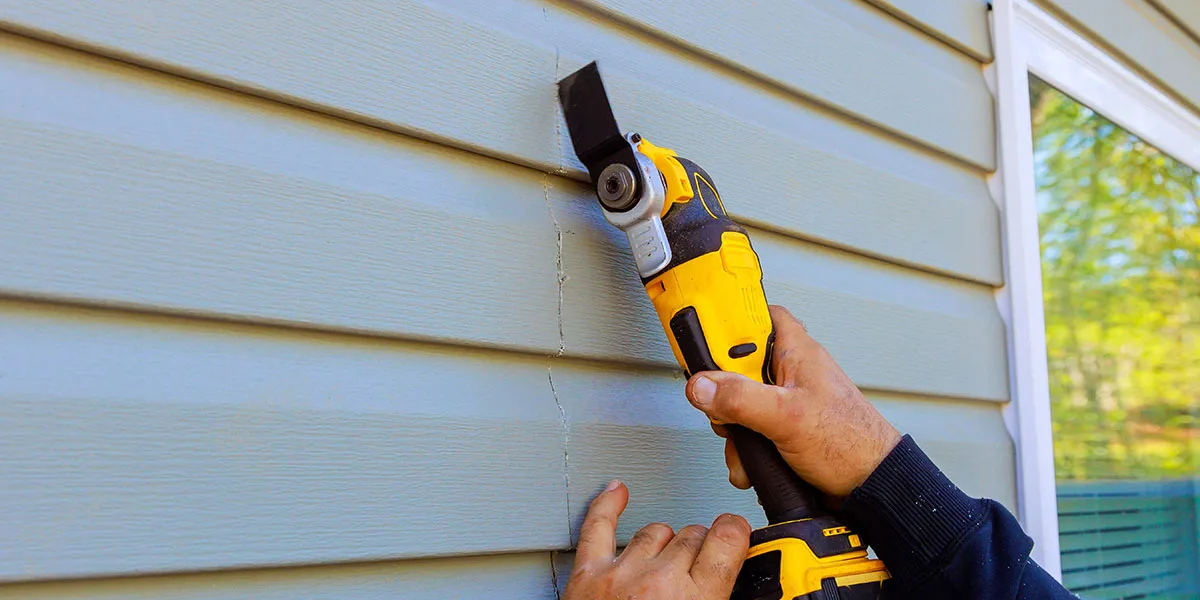
Burlington's older housing stock is particularly relevant here. Original vinyl siding from the late 1970s and 1980s, which covers a significant number of homes in the city's established suburban neighbourhoods, has reached or passed its designed service life. Modern vinyl products have improved substantially in UV stability, impact resistance, and dimensional stability compared to those early formulations. Homes with original siding from this era that are showing fading, chalking, or recurring seam separation are typically at the point where replacement is more cost-effective than continued repair.
Siding Material Options for Burlington Homes
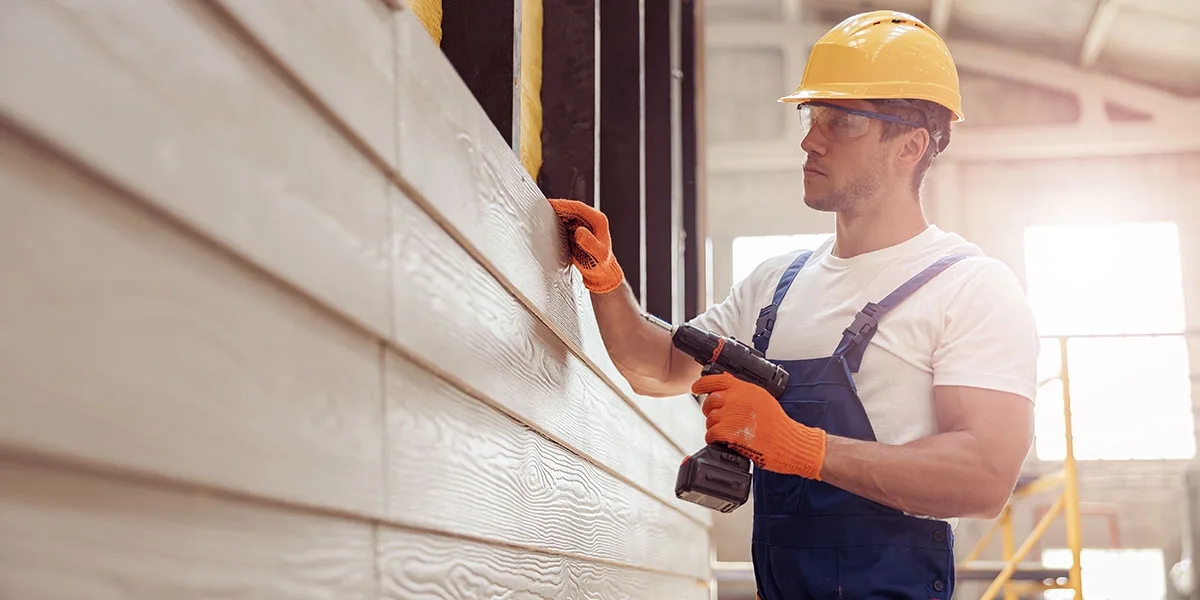
Both vinyl and fiber cement siding are strong options for Burlington properties. Vinyl remains the most widely installed replacement siding in the city and performs well when quality product grades are specified and installation is executed correctly. Modern insulated vinyl is particularly worth considering for Burlington's older homes with minimal wall insulation, where the foam backing adds meaningful thermal performance at the same time as the cladding is renewed.
Fiber cement is the higher-performing option for Burlington's climate, offering superior dimensional stability through freeze-thaw cycling and excellent moisture resistance suited to lakeshore humidity conditions. It is the stronger recommendation for Burlington properties where long-term ownership makes the performance premium worthwhile, and for homes in the more exposed lakefront and escarpment-adjacent locations where climate demands are most pronounced.
- Vinyl siding: $4 to $10 per square foot installed, 25 to 40-year lifespan, no painting required
- Fiber cement siding: $10 to $18 per square foot installed, 30 to 50-year lifespan, accepts paint
- Removal and disposal of existing siding: typically $1,000 to $3,000 added to the project cost
Eavestroughs in Burlington: Managing Lake Ontario Rainfall
Burlington receives significant precipitation throughout the spring and fall seasons, with high-volume rainfall events that place real demand on eavestrough drainage capacity. A properly functioning eavestrough system is not optional on a Burlington property. It is the mechanism that prevents hundreds of litres of water from landing against your foundation, siding, and landscaping with every significant rain event.
Common Eavestrough Problems in Burlington Homes
The most common eavestrough issues across Burlington's established housing stock are predictable and consistent with the city's housing age profile. Sectional systems installed in the 1980s and 1990s are developing the joint failure patterns that characterise aging aluminum as sealant degrades and thermal cycling works connections open. Hanger brackets that have carried decades of ice and debris load are pulling away from fascia boards that have themselves softened with moisture exposure. And systems that were sized for the original roof area are sometimes inadequate for homes that have had additions or re-roofing that altered drainage requirements.
Burlington's mature street tree canopy, particularly in established neighbourhoods like Roseland, Shoreacres, and south Alton, contributes to eavestrough debris loads that accelerate blockage formation and increase the frequency of maintenance required. Properties with significant deciduous tree coverage, particularly maples with their multi-stage shedding pattern through spring, summer, and fall, benefit most from leaf guard installation alongside any eavestrough replacement project.
Seamless Aluminum: The Standard for Burlington Replacement
For Burlington homeowners replacing aging sectional eavestrough systems, seamless aluminum is the clear upgrade recommendation. Custom-fabricated on-site to the exact dimensions of your home's roofline, seamless systems eliminate the mid-run joints that are the primary failure point of sectional installations. With no joints along the length of each run, there is no sealant to degrade, no connections to pull apart under ice load, and no leak points to develop as the system ages.
Seamless aluminum typically runs $8 to $15 per linear foot installed in Burlington. For a typical detached home in the city with 60 to 80 linear metres of eavestrough perimeter, a full seamless replacement including downspouts and removal of the existing system typically falls in the $3,000 to $5,500 range.
Soffit and Fascia in Burlington: The Roofline System Most Homeowners Overlook
Soffit and fascia sit at the edge of your roofline, doing work that most Burlington homeowners do not fully appreciate until something goes visibly wrong. The fascia board provides the mounting surface for the eavestrough system and protects the ends of the rafter tails from weather exposure. The soffit covers the underside of the roof overhang and, when vented, regulates the airflow through the attic that prevents moisture buildup and ice dam formation in winter.
What Failing Soffit and Fascia Look Like in Burlington
On Burlington's older housing stock, the most common soffit and fascia failure pattern is moisture-driven deterioration of painted wood systems. Paint that has lost its adhesion exposes the wood beneath to direct moisture contact, and once moisture reaches unprotected wood in Burlington's humid climate, rot follows within a few seasons. Fascia that has rotted cannot reliably hold the eavestrough system it supports, which is why sagging eavestroughs and deteriorating fascia almost always appear together.
Pest access through failing soffit is also a consistent issue in Burlington's treed neighbourhoods. Squirrels and birds are active in the spring nesting season, and gaps in deteriorating wood soffit panels are among the most common entry points into attic spaces. Addressing soffit integrity before nesting season begins is a practical priority for Burlington homeowners with older wood soffit systems showing visible gaps or damage.
The Case for Aluminum Soffit and Fascia in Burlington
Upgrading from painted wood soffit and fascia to aluminum or vinyl eliminates the maintenance cycle permanently. Aluminum soffit and fascia does not rot, does not require painting, handles moisture without degrading, and resists the pest access that develops in aging wood systems. In Burlington's climate, where humidity through the warmer months keeps exterior wood in a persistently challenging environment, the long-term maintenance relief that aluminum provides is meaningful.
Soffit and fascia replacement is also most cost-efficient when coordinated with eavestrough replacement. Since the eavestrough system mounts to the fascia, doing both at the same time avoids a second mobilization cost and ensures the new eavestrough installation has a sound, clean mounting surface.
Window and Door Capping in Burlington: Protecting Vulnerable Trim
The trim around windows and doors is among the most moisture-exposed wood on any Burlington home. Every winter, water enters even small gaps around window and door frames, freezes, and expands, widening those gaps incrementally with each cycle. Through Burlington's humid summers, exposed wood trim absorbs moisture repeatedly. The compounding effect of these cycles on older wood trim is progressive deterioration that eventually reaches the point of rot if the material is not protected.
Aluminum or vinyl capping covers exposed wood trim with a pre-formed shell that fits precisely over the existing profile. The aluminum itself is non-porous and does not absorb moisture. Combined with compatible caulking at all transition points, it creates a permanent barrier that removes exposed trim from the cycle of painting, cracking, and moisture infiltration that wood demands on its own.
For Burlington homeowners managing properties where the same window or door trim requires attention every two to three years, capping is a one-time investment that eliminates that recurring cost permanently. The installation cost is modest relative to the long-term maintenance saving, and the finished appearance typically improves on the look of aging painted wood trim as well.
Planning Your Burlington Exterior Renovation
Most Burlington exterior renovation projects involve more than one system. A home whose siding has reached end of life has almost certainly been through enough winters that its eavestrough system has as well, and the fascia behind both systems has been exposed to the same moisture cycling throughout. Addressing these systems together, rather than sequentially over several years, has real practical advantages.
Coordinate Related Work
Siding and soffit and fascia work together as the exterior envelope of your roofline and walls. Eavestrough replacement is most efficiently done at the same time as fascia replacement, since the fascia is the mounting surface. Window and door capping is naturally combined with any project that involves repainting or replacing trim. Bundling related work reduces total mobilization cost, ensures compatibility between new components, and avoids the situation of having partially renovated sections visible alongside deteriorating ones.
Get an On-Site Assessment Before Deciding on Scope
Online estimates for exterior renovation work are useful for rough budgeting but are no substitute for an accurate on-site measurement and assessment. The actual surface areas of your home's exterior, the condition of the systems being replaced, and the access conditions that affect installation time are all factors that require physical inspection to evaluate correctly. Most reputable exterior contractors offer free on-site assessments, and the specificity of the quote that results from one is substantially more useful than a range derived from per-square-foot national averages.
Ask About Warranties
Quality exterior renovation work in Burlington comes with two layers of warranty coverage. The manufacturer's warranty covers defects in the material itself, ranging from 25-year to lifetime coverage on premium vinyl siding products and 15 to 50 years on fiber cement and aluminum products depending on the manufacturer. The contractor's workmanship warranty covers the installation quality, typically ranging from one to ten years depending on the contractor and the scope of work. Ask for both warranty components to be specified in writing before any project begins.
Burlington homeowners who coordinate siding, eavestrough, and soffit and fascia work in a single project typically achieve better outcomes at lower total cost than those who address each system separately over multiple years.
Why Burlington Homeowners Work with Mario Aluminum
Mario Aluminum has been completing exterior renovation projects across Burlington for over 20 years. In that time, we have worked in every major neighbourhood in the city, from the older lakeshore communities in the south to the established suburban areas in the centre and the newer developments near the escarpment in the north. That breadth of local experience informs every assessment and recommendation we make.
We install and repair siding, eavestroughs, soffit and fascia, window and door capping, and leaf guard systems across Burlington and the surrounding GTHA. Every project begins with a free on-site assessment and a clear, itemized quote. We do not recommend work that is not needed, and we will tell you honestly when repair is the right answer over replacement.
Frequently Asked Questions
For spring installations, booking in late winter gives you the best choice of scheduling slots before the peak renovation season fills contractor calendars. Spring is consistently the busiest period for exterior work in Burlington, as homeowners address post-winter damage and schedule projects before summer. Fall is the second-busiest period, driven by pre-winter preparation. If you are planning a non-urgent project, scheduling outside these peak periods, in late summer or early winter, typically offers faster availability and sometimes more flexible scheduling. For urgent repairs, most reputable contractors maintain capacity for time-sensitive work regardless of season.
Burlington’s established neighbourhoods, particularly in Roseland, Shoreacres, and south Alton, have significant mature tree coverage that deposits substantial debris into eavestrough systems across multiple seasons. If you find yourself cleaning your eavestroughs more than twice a year, experiencing overflow during moderate rainfall events on an otherwise functional system, or finding significant debris accumulation just weeks after a thorough cleaning, your property’s tree coverage is likely a significant factor. Leaf guard installation alongside your next eavestrough project is worth discussing as a way to reduce ongoing maintenance frequency, particularly for properties with mature maples that shed seed pods in spring, smaller seeds through summer, and full leaf coverage in fall.
Yes, in a meaningful way. Burlington’s lakeshore position keeps ambient humidity elevated through the warmer months, which accelerates the degradation of siding materials that are not fully moisture-resistant. For lakeshore and south-end properties with the highest direct humidity exposure, fiber cement’s non-porous, dimensionally stable composition is particularly well suited. For homes further from the lake in Burlington’s central and north end communities, premium vinyl remains a strong choice. The escarpment-adjacent properties in the north end face wind and precipitation exposure that also favours higher-performance materials. An on-site assessment with a contractor familiar with Burlington’s specific neighbourhood conditions will give you a recommendation grounded in your property’s actual exposure.
Project costs in Burlington follow the same general ranges as the broader Hamilton and GTHA market. Siding installation runs from approximately $4 to $18 per square foot depending on material selection, with a full vinyl replacement on a typical detached home typically falling between $8,000 and $18,000 and fiber cement running higher. Eavestrough replacement runs $8 to $15 per linear foot for seamless aluminum, with a typical full replacement on a detached Burlington home in the $3,000 to $5,500 range. Soffit and fascia replacement runs $10 to $25 per linear foot for aluminum systems. Window capping costs depend on the number of openings being capped but is typically the most modestly priced of the four service categories. A free on-site assessment gives you an accurate number specific to your property.
The most frequently requested exterior renovation projects across Burlington vary by neighbourhood and housing era. In the city’s older lakeshore and south end communities, full siding replacement, eavestrough replacement, and soffit and fascia upgrades from wood to aluminum are all common, often as coordinated projects on homes where multiple systems have reached end of life simultaneously. In the established suburban areas built between the late 1970s and mid-1990s, eavestrough replacement and siding assessment are the most frequent requests, as the original installations from that era are now showing age-related wear. In newer north end communities, the requests are typically more targeted, involving specific repairs, leaf guard installation, or window capping on homes whose primary systems still have service life remaining.
Ready to Get Started on Your Burlington Exterior Renovation?
Burlington's housing stock is aging into a period where exterior renovation decisions are becoming increasingly relevant for a large portion of the city's homeowners. Whether you are managing a lakeshore property with 50-year-old systems that need full replacement, a 1985 suburban home whose vinyl siding and eavestroughs are approaching the end of their service lives, or a newer property that needs targeted attention on specific components, the right starting point is a free on-site assessment with a contractor who knows Burlington's specific conditions.
Mario Aluminum provides free exterior renovation assessments and quotes for Burlington homeowners across the full city, from the lakeshore communities in the south to the escarpment-adjacent neighbourhoods in the north. We serve Burlington as part of our broader service area covering Hamilton, Stoney Creek, Oakville, Ancaster, Waterdown, and Mississauga.
Free on-site exterior renovation assessments for Burlington homeowners. No obligation, no pressure, and a clear recommendation grounded in what we actually find at your property.
Call us at (289) 993-5566 or request a free quote online to schedule your Burlington exterior assessment.
Contents