Stoney Creek occupies a distinctive geographic position between Lake Ontario and the Niagara Escarpment, and that position creates exterior maintenance demands that differ meaningfully from what Hamilton's lower-city neighbourhoods experience. Lakeshore humidity, escarpment wind, above-average snowfall, and concentrated freeze-thaw cycling all bear on the siding, eavestroughs, soffit, fascia, and trim of Stoney Creek homes. This guide gives Stoney Creek homeowners a locally grounded overview of what those conditions require from their exterior systems and how to make renovation and maintenance decisions that account for the specific environment their homes occupy.
Stoney Creek sits at the point where Lake Ontario's shoreline meets the base of the Niagara Escarpment, a geography that gives the community its distinctive character and creates weather conditions that are measurably harder on home exteriors than what most of the surrounding region experiences. Wind patterns along the lakeshore differ from those in sheltered inland communities. Humidity from the lake stays elevated through summer. Snowfall, particularly during lake-effect events, accumulates more heavily in Stoney Creek than in lower Hamilton neighbourhoods. And freeze-thaw cycling through winter is relentless, with the lake's moderating influence sometimes extending the period of temperature oscillation around zero rather than stabilising it.
These conditions are not an argument against living in Stoney Creek. They are an argument for understanding what your home's exterior is managing and making renovation and maintenance decisions that account for the specific environment your property occupies. Exterior systems that perform adequately in a sheltered Hamilton neighbourhood may underperform on a Stoney Creek property with lakeshore exposure. Materials and installation details that are optional refinements elsewhere become more consequential here.
At Mario Aluminum, we have been completing exterior renovation projects across Stoney Creek for over 20 years, on older lakeshore properties, mountain homes, and the newer subdivisions that have extended the community eastward and upward. This guide covers what we have learned about what Stoney Creek homes specifically require.
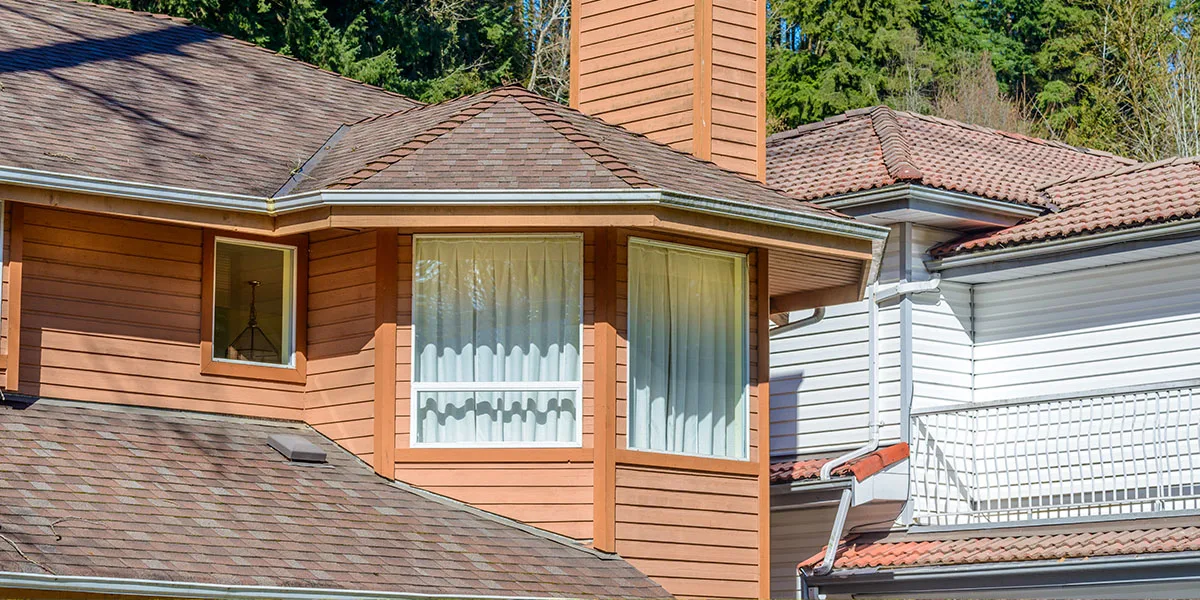
Stoney Creek's Geography and What It Means for Exterior Systems
Stoney Creek is not a single uniform environment. The community spans significant elevation change from the lakeshore to the escarpment top, and exterior conditions vary meaningfully across that range.
Lakeshore and Lower Stoney Creek
Properties closest to Lake Ontario, including the older neighbourhoods along Fruitland Road and the residential streets between the lake and the QEW corridor, face the most direct lakeshore exposure. Wind off the water reaches these properties with minimal shelter, and lake-driven humidity stays elevated through summer and early fall. The combination of sustained moisture exposure and wind-driven precipitation creates the most demanding exterior conditions in the community. South and southwest-facing elevations on lakeshore-adjacent properties typically show the earliest and most pronounced signs of exterior wear.
The Mountain and Upper Stoney Creek
Properties on or near the escarpment, in neighbourhoods like Leckie Park, Battlefield, and the higher elevations along Highway 8, experience conditions that differ from the lakeshore in specific ways. Wind exposure at elevation is higher. Snowfall accumulation is consistently greater than at lower elevation, particularly during lake-effect events. And the temperature differential between the escarpment top and lower communities means freeze-thaw cycling can occur on a slightly different schedule at elevation, sometimes producing more complete freeze cycles relative to lower-city properties during the same weather system.
Newer Subdivisions in East Stoney Creek
The residential development that has expanded Stoney Creek eastward along the lakeshore and into areas around Winona and Fruitland over the past two to three decades contains homes that are generally 10 to 25 years old. Original exterior systems on these properties are entering the period where early performance issues become apparent and where assessment is worth prioritising before systems reach the point of obvious failure.
Stoney Creek's elevation range means that the right exterior renovation approach for a lakeshore bungalow on Fruitland Road differs from what a mountain home above the escarpment requires. Location within the community is a relevant input to any material or maintenance recommendation.
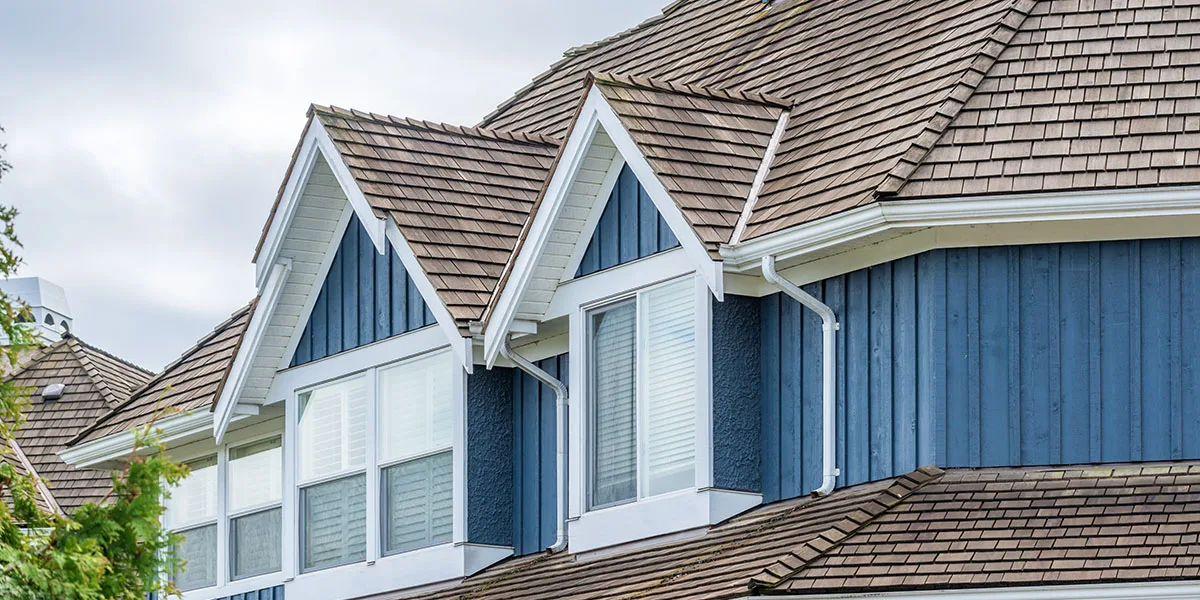
Siding in Stoney Creek: Building for Lakeshore and Escarpment Conditions
Siding on Stoney Creek properties carries a heavier weathering load than on comparable properties in more sheltered communities. The combination of lakeshore humidity, wind-driven precipitation, and extended freeze-thaw stress accelerates the degradation of siding materials that are not well-matched to these conditions.
What Stoney Creek's Climate Does to Siding
Wind-driven rain along the lakeshore hits south and west-facing siding surfaces at angles that expose every gap at panel edges, around trim, and at corner transitions. Unlike vertical rainfall that runs off these surfaces, horizontal wind-driven moisture penetrates any opening it finds. Properties along the lower lakeshore corridors consistently show siding deterioration concentrated on the lake-facing elevations, while more sheltered north and east faces hold their condition longer.
Freeze-thaw cycling puts repeated thermal stress on siding panel edges, seams, and fastening points. In Stoney Creek's climate, where the lake's moderating influence can extend the period during which temperatures oscillate around zero rather than stabilising, this cycling can be more frequent than in inland communities. Materials that expand and contract significantly with temperature changes experience this stress more acutely.
For older Stoney Creek properties with original aluminum siding from the 1960s and 1970s, or vinyl siding installed in the 1980s and early 1990s, replacement is typically overdue. Many of these homes in the lower lakeshore neighbourhoods are carrying exterior cladding that has exceeded its designed service life by a decade or more.
Material Recommendations for Stoney Creek Properties
For lakeshore and lower Stoney Creek properties with the highest direct exposure, fiber cement siding offers the strongest performance profile. Its dimensional stability through freeze-thaw cycling, non-porous moisture resistance, and impact durability against wind-driven debris are all directly relevant to the conditions these properties face. The higher upfront cost relative to vinyl is most readily justified for Stoney Creek's most exposed locations.
For mountain and upper Stoney Creek properties with escarpment exposure but less direct lakeshore humidity, premium insulated vinyl represents a strong choice at a more accessible price point. The foam backing's added panel rigidity improves wind resistance relative to standard vinyl, and the improved thermal performance suits older escarpment-area homes where wall insulation is often minimal. The critical specification distinction for Stoney Creek, at any elevation, is product grade: standard builder-grade vinyl is a weaker choice in this environment than in more sheltered locations, and premium product specifications are more justified here.
- Fiber cement siding: $10 to $18 per square foot installed, recommended for lakeshore-adjacent and highly exposed properties
- Premium insulated vinyl: $6 to $10 per square foot installed, appropriate for most Stoney Creek properties with correct product specification
- Standard vinyl: $4 to $8 per square foot installed, acceptable for sheltered north and east-facing elevations with appropriate installation detail
Eavestroughs in Stoney Creek: Handling High Precipitation and Ice Load
Stoney Creek's above-average precipitation, combined with the lake-effect snowfall that deposits significant accumulation in short periods, creates demanding conditions for eavestrough systems. A system that handles typical Hamilton rainfall adequately may be undersized or underfastened for the volume and ice load that Stoney Creek properties experience in a significant winter season.
Snowmelt and High-Volume Drainage
Lake-effect snowfall events can deposit 30 to 50 centimetres of accumulation in short windows, and the snowmelt that follows a significant event produces concentrated high-volume water discharge off roof surfaces within a compressed timeframe. Eavestrough systems that are partially blocked from fall debris, inadequately sloped, or have hanger brackets that have been weakened by prior ice load are most vulnerable to failure during these events. Blocked systems back up, overflow onto fascia and siding, and can contribute to ice dam formation at the eaves when temperatures drop again after a partial thaw.
Ice Load and Fastening Requirements
Ice that forms in and on eavestrough systems during freeze-thaw cycles adds significant weight to hanger connections that were designed to carry only the weight of water. On Stoney Creek properties with above-average snowfall and extended ice retention, the cumulative stress on hanger brackets over a full winter season is greater than on lower-elevation properties in the Hamilton area. Fastening systems for eavestrough installation in Stoney Creek benefit from closer hanger spacing and appropriate fastener depth into sound fascia to maintain reliable support through a demanding winter loading cycle.
Seamless Aluminum and Appropriate Profile Sizing
For Stoney Creek homeowners replacing eavestrough systems, seamless aluminum fabricated on-site is the clear specification. The heavier gauge aluminum used in seamless fabrication handles ice load and debris weight more reliably than lighter sectional products, and the absence of mid-run joints removes the primary failure mode that the combination of ice stress and thermal cycling accelerates in sectional systems.
Profile sizing deserves specific attention for Stoney Creek's higher-snowfall properties. Standard 4-inch K-style eavestroughs handle most residential roof areas adequately under typical conditions. For Stoney Creek properties with large roof drainage areas, complex rooflines, or locations that receive concentrated snowmelt from multiple roof faces into a single run, upsizing to 5-inch profiles at replacement time is worth discussing with your contractor.
Seamless aluminum runs approximately $8 to $15 per linear foot installed in Stoney Creek. A full replacement on a typical detached home typically falls between $3,000 and $5,500 depending on perimeter, roofline complexity, and whether fascia repair work is required.
Soffit and Fascia in Stoney Creek: Roofline Protection in a Demanding Climate
Soffit and fascia are among the most weather-exposed components of any home's exterior, and on Stoney Creek properties they face conditions at the upper end of what Ontario exterior systems typically encounter. Fascia that carries the eavestrough system is subject to the moisture that overflowing or leaking gutters direct against it, and that moisture exposure in Stoney Creek's humid lakeshore environment is more persistent than in drier inland conditions.
Common Failure Patterns in Stoney Creek
For older Stoney Creek properties with original wood soffit and fascia, the failure pattern is predictable and consistent. Lake humidity through summer and fall keeps wood moisture levels elevated, slowing the drying that would otherwise allow painted wood to manage intermittent moisture exposure. Paint adhesion on consistently moist wood degrades faster than in drier environments, and once paint film integrity is lost, rot follows more quickly than homeowners accustomed to inland properties typically expect.
Eavestrough overflow events, which are more common in Stoney Creek's high-precipitation environment, accelerate fascia deterioration further. Water running down the face of the fascia from a backed-up or misaligned eavestrough creates sustained contact with the wood that can initiate rot progression within a season or two if the moisture source is not addressed.
Why Aluminum Is the Appropriate Specification for Stoney Creek
The case for upgrading from wood to aluminum soffit and fascia is stronger in Stoney Creek than in more sheltered communities precisely because of the humidity and precipitation conditions the community experiences. Aluminum does not absorb moisture, does not rot, does not require painting, and maintains its structural integrity through the freeze-thaw cycling that wood handles increasingly poorly as it ages. For Stoney Creek properties where the maintenance cycle of painted wood soffit and fascia is a recurring challenge, the aluminum upgrade is a practical and cost-effective resolution.
Coordinating soffit and fascia replacement with eavestrough replacement is particularly advisable in Stoney Creek, where the two systems interact directly and where the fascia condition has often been compromised by the same eavestrough problems that are prompting the eavestrough work. Installing a new seamless eavestrough system on sound new aluminum fascia is the combination that delivers the best long-term outcome.
Window and Door Capping in Stoney Creek: Sealing Against Lakeshore Moisture
Window and door trim on Stoney Creek properties faces a particularly aggressive combination of moisture sources. Lake humidity keeps ambient moisture elevated through the warmer months, which means exposed wood trim is rarely fully dry between rainfall events during summer and fall. Wind-driven rain hits window frames directly on exposed elevations, finding every gap at the frame perimeter and at caulking seams that have cracked or shrunk. And freeze-thaw cycling through winter expands water that has entered any gap, widening those openings incrementally with each cycle.
For older Stoney Creek properties where window trim requires repainting or recaulking on a recurring two to three-year cycle, aluminum capping is the permanent alternative that most effectively breaks that pattern. The aluminum shell covers exposed wood entirely, the caulking at its perimeter seals the remaining transitions, and the material's non-porous surface removes the underlying wood from direct moisture contact indefinitely.
On lakeshore-adjacent properties in particular, where wind-driven moisture puts additional pressure on every exterior seal, the quality of the caulking and moisture barrier detail at capping transitions matters more than it does in sheltered locations. A quality capping installation on a Stoney Creek property pays particular attention to sill capping slope to direct water outward, corner joint sealing, and the junction between the cap and the surrounding siding on exposed elevations.
A Seasonal Exterior Maintenance Calendar for Stoney Creek Homeowners
Stoney Creek's climate creates predictable seasonal maintenance windows that are worth building into an annual exterior care routine. The following calendar reflects what we recommend based on two decades of working on Stoney Creek properties.
Spring: Post-Winter Assessment
Once temperatures stabilise consistently above zero and the last ice has cleared, walk your full perimeter and assess each exterior system. Look for siding panels that have buckled, cracked, or separated at seams, particularly on south and west-facing elevations where freeze-thaw stress and wind-driven moisture are highest. Inspect eavestrough runs for sagging, joint separation, and rust staining. Check soffit and fascia for paint failure and soft spots. Run a garden hose through the eavestrough system to verify drainage before the spring rainfall season arrives.
Late Spring and Early Summer: Eavestrough Cleaning
The first eavestrough cleaning of the year in Stoney Creek addresses winter debris accumulation and the seed and blossom material that falls through May and June. This cleaning also gives you the opportunity to inspect hanger integrity after the ice load season and identify any joints that have separated over winter before heavy spring and summer rainfall events expose those failures.
Late Fall: Pre-Winter Preparation
The most important exterior maintenance window of the year for Stoney Creek homeowners. After peak leaf drop, typically mid to late November, clean eavestroughs thoroughly, verify downspout flow, and inspect the full exterior for any damage or sealing failures that need attention before the first hard freeze. Caulking that has cracked or gaps that have opened at siding transitions should be addressed now, as winter weather will exploit every unsealed opening through the season. The goal is to send every exterior system into winter fully functional and fully sealed.
For Stoney Creek homeowners, the late-fall pre-winter exterior check is not optional maintenance. It is the single most cost-effective thing you can do to protect your home through one of Ontario's more demanding winter environments.
Frequently Asked Questions
For Stoney Creek properties where multiple systems are approaching end of life simultaneously, which is common in the older lakeshore and mountain neighbourhoods where original installations date from the same era, doing coordinated work is more cost-effective than phasing across multiple years. A single contractor mobilisation covers all systems, there is no double-handling of any component, and the new systems are compatible with each other from installation day. For properties where only one system needs immediate attention, targeted work is appropriate. The sequencing principle that matters most is to address moisture management systems first: eavestroughs and fascia before siding, siding before capping. This sequence prevents new work from being compromised by failing systems above or behind it.
Project costs in Stoney Creek follow the same general ranges as the broader Hamilton market. Full siding replacement with premium vinyl runs $8,000 to $18,000 for a typical detached home, with fiber cement running $15,000 to $30,000 depending on home size and complexity. Eavestrough replacement with seamless aluminum typically falls between $3,000 and $5,500 for a typical detached home, including removal of the existing system and new downspouts. Soffit and fascia replacement in aluminum adds $10 to $20 per linear foot. Window capping is typically the most modestly priced of the four services. A free on-site assessment gives you accurate numbers specific to your property and its exposure conditions.
In the older lakeshore and lower Stoney Creek neighbourhoods, full exterior system replacement is the most common project scope, often involving siding, eavestroughs, and soffit and fascia simultaneously as systems that were all installed around the same time reach end of life together. In the mountain and escarpment-adjacent areas, siding replacement and eavestrough replacement are the most frequent individual service requests, with the emphasis on material quality appropriate to the wind and snowfall exposure those properties experience. In the newer east Stoney Creek subdivisions, the most common requests are targeted maintenance, eavestrough cleaning and assessment, and window capping on homes where the builder-grade trim is showing its age.
Twice per year is the minimum sensible schedule for most Stoney Creek properties, with a spring clean after seed and blossom debris has finished falling and a late-fall clean after peak leaf drop. Properties in the older lakeshore neighbourhoods with significant tree coverage may need a third cleaning in late summer to manage the debris load before fall leaf drop compounds it. Properties on the mountain with conifer coverage may need year-round attention given pine and spruce needle shedding. The specific schedule for your property depends on your tree coverage and location, and your eavestrough contractor can help you calibrate it during an assessment.
Yes, meaningfully. Lakeshore and lower Stoney Creek properties face the highest direct humidity and wind-driven precipitation exposure, which makes the performance advantages of fiber cement siding and premium aluminum eavestrough systems more consequential than they are in sheltered locations. For these properties, material specification is worth prioritising over upfront cost savings. Mountain and upper Stoney Creek properties face different conditions, with greater wind load and snowfall but less direct lakeshore humidity, and the right specification reflects that difference. An on-site assessment that takes your specific property location and exposure into account gives you a recommendation grounded in your actual conditions rather than a generic material preference.
Ready to Assess Your Stoney Creek Home's Exterior?
Stoney Creek's position between the lake and the escarpment creates exterior conditions that reward homeowners who understand what their properties are managing and make renovation and maintenance decisions accordingly. The cost of deferred maintenance in this environment is consistently higher than in more sheltered communities, because the same weather that makes the community attractive is actively working on every exterior system through every season.
Mario Aluminum has been serving Stoney Creek homeowners for over 20 years, on lakeshore properties, mountain homes, and the newer subdivisions that have grown the community over recent decades. We bring local knowledge of what Stoney Creek conditions require to every assessment we complete in the area. Free on-site quotes are available with no obligation, and we will give you an honest assessment of where your exterior systems stand and what they need.
Serving Stoney Creek homeowners for over 20 years. We know what lakeshore and escarpment conditions do to exterior systems, and we install to the standard those conditions demand.
Call us at (289) 993-5566 or request a free quote online to schedule your Stoney Creek exterior assessment.
Contents

- Stoney Creek's Geography and What It Means for Exterior Systems
- Siding in Stoney Creek: Building for Lakeshore and Escarpment Conditions
- Eavestroughs in Stoney Creek: Handling High Precipitation and Ice Load
- Soffit and Fascia in Stoney Creek: Roofline Protection in a Demanding Climate
- Window and Door Capping in Stoney Creek: Sealing Against Lakeshore Moisture
- A Seasonal Exterior Maintenance Calendar for Stoney Creek Homeowners
- Frequently Asked Questions
- Ready to Assess Your Stoney Creek Home's Exterior?