Siding is designed to be tough. Quality vinyl, fiber cement, and engineered wood products are built to handle years of Ontario weather without much attention. But eventually — whether due to age, storm damage, or installation issues that have caught up with the material — siding reaches a point where repair is no longer the right answer.
The challenge for most homeowners is knowing where that line is. A single cracked panel is clearly a repair. A home where half the panels are fading, bowing, and showing moisture damage is clearly a replacement. But the situations in between — and there are many of them — are less obvious, and the wrong call in either direction costs money.
This guide walks through the most reliable warning signs that your siding is telling you it needs to go, as well as the situations where repair is still the smarter choice. If you're a Hamilton homeowner weighing your options, here's how to read what your exterior is telling you.
Repair vs. Replacement: The Core Question
Before getting into specific warning signs, it helps to understand the framework contractors use when assessing siding. The decision between repair and replacement generally comes down to three factors:
- Scope: How much of the siding is affected? Isolated damage — a few panels, a single wall — almost always points to repair. Widespread issues across multiple elevations point to replacement.
- Underlying damage: Is the damage contained to the siding material itself, or has moisture reached the sheathing, insulation, or framing behind it? Surface damage is repairable. Compromised structure typically means the siding needs to come off regardless.
- Age and condition: Siding that is near or past its expected lifespan and showing multiple issues simultaneously is usually more cost-effective to replace than to keep patching. Repairs on aging siding tend to recur.
With that framework in mind, here are the specific signs to look for.
Warning Signs Your Siding May Need Replacing
1. Warping, Buckling, or Panels That Won't Lie Flat
Siding panels that have warped, buckled, or pulled away from the wall surface are one of the clearest indicators of a problem. In most cases, this kind of distortion is caused by one of two things: moisture getting behind the panel and expanding into the material, or improper installation that didn't allow for the natural thermal expansion and contraction siding materials go through across seasons.
A small section of buckling caused by a single installation error can sometimes be remedied by re-fastening or replacing the affected panels. But if you're seeing distortion across multiple panels or multiple walls, the issue is systemic. Widespread warping almost always means the siding has reached the end of its useful life, or that a moisture problem behind the wall requires the entire cladding to come off before it can be properly addressed.
Run your hand along the surface of your siding at various points. It should feel consistently flat and firm. Any give, softness, or movement under light pressure is worth investigating further.
2. Frequent or Recurring Need for Repainting
Properly installed, quality siding should hold paint for a minimum of eight to ten years. If you find yourself repainting exterior siding every three to five years — or if paint is peeling, bubbling, or failing to adhere in patches — the paint isn't the problem. The siding is.
Paint fails prematurely on siding for two primary reasons: moisture working from behind the panel and pushing the paint off from the inside, or the siding material itself has degraded to the point where it no longer provides a stable substrate. Either way, repainting over the symptom without addressing the cause will produce the same result again within a few years.
This is one of the most common situations where homeowners have spent several rounds of repainting money before realizing that siding replacement would have been the more economical decision from the start. If your paint history looks like a recurring problem rather than a routine maintenance cycle, it's worth having the siding assessed.

3. Visible Cracks, Holes, or Gaps at Seams
Cracks in individual siding panels are not automatically a replacement indicator — a single cracked panel is a repair. But the location and pattern of cracking matters significantly.
Cracks that appear consistently at seams, corners, or fastening points suggest that the siding material has become brittle over time and is no longer flexible enough to absorb the stress of seasonal movement. This is particularly common in older vinyl siding, which becomes more rigid as it ages and is more prone to cracking in cold temperatures. When brittleness is the underlying cause, repairing individual cracks tends to be a losing battle — new cracks form as the material continues to contract and expand.
Gaps at seams — where two panels meet or where siding meets trim — are a different concern. These openings allow wind, water, and insects direct access to the wall assembly. Small gaps can sometimes be caulked, but gaps that have developed because the siding material has shrunk or the installation has shifted over time tend to recur after caulking and may indicate a more systemic problem.
A useful rule of thumb: if a crack or gap is isolated and the surrounding siding is in good condition, repair it. If you're finding cracks or gaps in multiple locations during a single walk-around, consider having a contractor assess whether the pattern points to a larger issue.
4. Higher Heating or Cooling Bills Without an Obvious Cause
Your siding plays a meaningful role in your home's thermal envelope. When siding is performing properly — sealed at all seams, undamaged, and backed by intact housewrap and insulation — it helps retain conditioned air inside and keeps outdoor temperature changes from affecting interior comfort.
When siding is failing, that insulating function degrades. Gaps, cracks, and areas where siding has pulled away from the wall create pathways for air infiltration. If your heating or cooling costs have been creeping upward without a clear explanation — no changes to your furnace or air conditioner, no unusually extreme weather — deteriorating siding is worth investigating as a contributing factor.
This is one of the less obvious signs of siding failure, but it's one that homeowners often mention after a replacement: the improvement in interior comfort and reduction in energy costs that follows new siding installation, particularly when insulated siding or updated housewrap is part of the project.
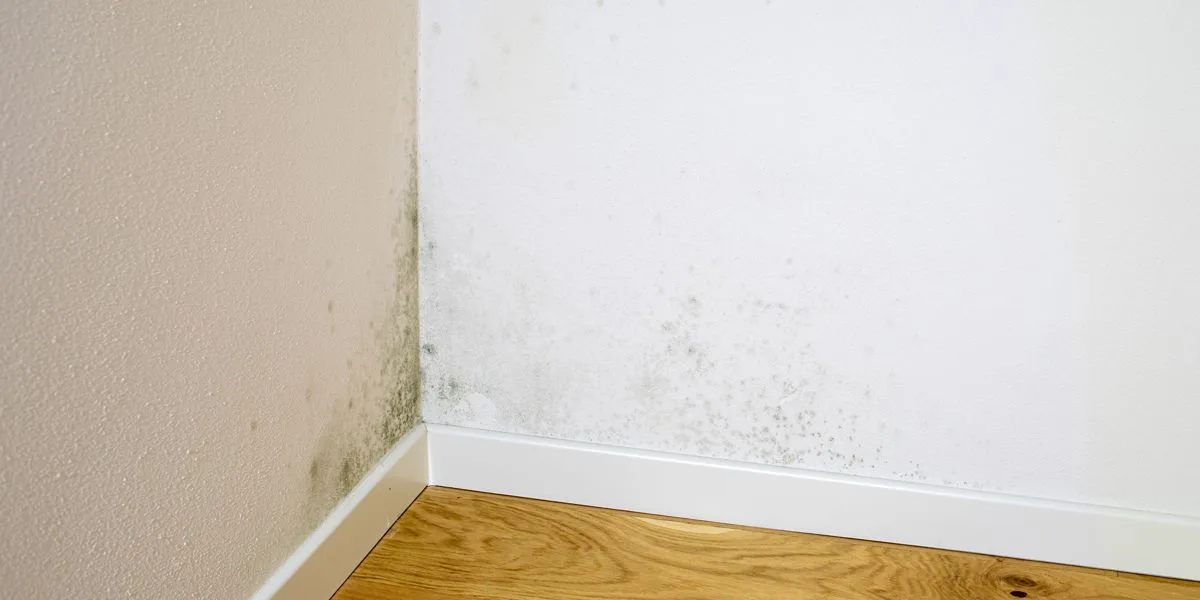
5. Interior Moisture — Staining, Mold, or Soft Drywall
By the time siding failure shows up on the interior of your home, the problem has typically been building for some time. Water that gets past damaged siding travels through housewrap, insulation, and sheathing before it reaches interior drywall — and by the time you see a stain on a wall or ceiling, or notice that drywall feels soft near an exterior wall, significant moisture accumulation has already occurred.
Interior moisture signs worth investigating include: staining or discolouration on interior walls near exterior surfaces, a persistent musty smell in rooms adjacent to exterior walls, visible mold growth in corners or along baseboards near the exterior, and drywall that feels soft, spongy, or shows any give when pressed.
These symptoms require prompt attention regardless of what the exterior looks like. In many cases, the exterior siding will need to come off to properly assess and repair the damage to the wall assembly underneath — which makes siding replacement not just an option but a necessary part of the remediation process.
6. Fading, Chalking, or Severe Discolouration
Some degree of colour change in siding is normal over time, particularly in south- and west-facing elevations that receive the most sun exposure. But severe, uneven fading — especially when it's accompanied by a chalky residue that rubs off on your hand — is a sign that the siding material is breaking down at a structural level.
Chalking occurs when UV exposure degrades the surface compounds in vinyl and other synthetic siding materials. At early stages it's a cosmetic issue. At advanced stages it indicates the material has lost a significant portion of its protective and structural integrity. Siding that chalks heavily is also more susceptible to moisture absorption, which accelerates the damage.
Fading that has progressed to the point of severe discolouration across most of the home's exterior is also a reasonable signal that the siding has reached or passed its expected lifespan and that replacement, rather than cosmetic treatment, is the right next step.
7. The Siding Is More Than 20 to 25 Years Old
This isn't a warning sign in the same visible sense as the others — but age alone is a meaningful factor in the replacement vs. repair decision, and it's one worth considering alongside whatever physical signs you observe.
Vinyl siding installed in the 1990s and early 2000s has reached or is approaching the end of its designed service life. The material technology from that era, while durable by the standards of its time, is significantly outperformed by modern siding products in terms of impact resistance, UV stability, insulation value, and moisture management. Even siding that appears superficially intact at 20-plus years may be more brittle and moisture-permeable than it looks.
When older siding is repaired, the new panels often don't match the existing material precisely in colour or profile — because the original products are no longer manufactured. This can leave visibly patched sections that affect curb appeal. For many homeowners, this reality tips the balance toward full replacement rather than ongoing repairs on aging material.
If your siding is over 20 years old and showing any of the other signs on this list, replacement is almost certainly the more cost-effective long-term decision. Repairing aging siding tends to produce diminishing returns quickly.
When Repair Is Still the Right Answer
Not every siding problem requires a full replacement — and a reputable contractor will tell you that honestly. Here are the situations where repair genuinely makes sense:
- Storm or impact damage to isolated panels on siding that is otherwise in good condition and less than 15 years old
- A small section of panels affected by a contained moisture issue — such as a window that leaked before being replaced — where the surrounding siding is performing well
- Minor cracking or gap formation in a single area that can be attributed to a specific cause and isn't part of a broader pattern
- Colour matching is achievable — repairs on siding where the existing material is still being manufactured and a close match is possible
The honest answer in most cases is that a professional assessment will give you more useful information than a visual inspection alone. A contractor can check for moisture behind the panels, assess the condition of the housewrap and sheathing, and give you a clear picture of whether you're looking at a repair or a replacement — and what each option will realistically cost over a five-to-ten-year horizon.
Choosing the Right Replacement Siding for a Hamilton Home
If your assessment points toward replacement, material selection is the next decision. The three most common options for Hamilton homes each have distinct advantages:
Vinyl Siding
The most widely installed siding type in Southern Ontario. Modern vinyl has improved significantly from older formulations — current products offer better impact resistance, UV stability, and a wider range of profiles and colours. Insulated vinyl siding with a foam backing is worth considering for homes where energy performance is a priority. Low maintenance, cost-effective, and available in profiles that suit most Hamilton housing styles.
Fiber Cement Siding
A composite material made from cement, sand, and cellulose fibre. Fiber cement is highly resistant to moisture, insects, fire, and impact — making it well-suited to Ontario's climate. It accepts paint well and holds colour longer than vinyl. Available in profiles that closely replicate the look of wood siding, making it a popular choice for homes where aesthetics are a priority. Higher upfront cost than vinyl, but a longer lifespan and lower long-term maintenance.
Engineered Wood Siding
Manufactured wood composite products offer the appearance of natural wood with improved moisture and pest resistance. A good middle-ground option for homeowners who want a traditional wood look without the maintenance demands of real wood. Performs well in Ontario's climate when properly installed with adequate moisture management details.
Not Sure Where Your Siding Stands? We'll Take a Look
One of the most common things homeowners tell us when we arrive for a siding assessment is that they weren't sure whether they needed a repair or a replacement — and they didn't want to commit to a full project without knowing for certain. That's exactly the right instinct. A proper on-site assessment takes the guesswork out of the decision.
Mario Aluminum provides free on-site siding assessments for homeowners across Hamilton, Stoney Creek, Burlington, Oakville, Ancaster, and Waterdown. We'll look at the condition of your siding, check for any signs of underlying moisture damage, and give you a straight answer about whether repair or replacement makes more sense for your home — along with a clear quote for whichever direction makes sense.
There's no obligation and no sales pressure. If your siding is fine and only needs minor attention, we'll tell you that.
Siding replacement is one of the best return-on-investment exterior projects a Hamilton homeowner can undertake — improving energy efficiency, curb appeal, and resale value all at once. But only if the timing is right. We'll help you figure out if that time is now.
Call us at (289) 993-5566 or request a free quote online to schedule your siding assessment.
Contents